
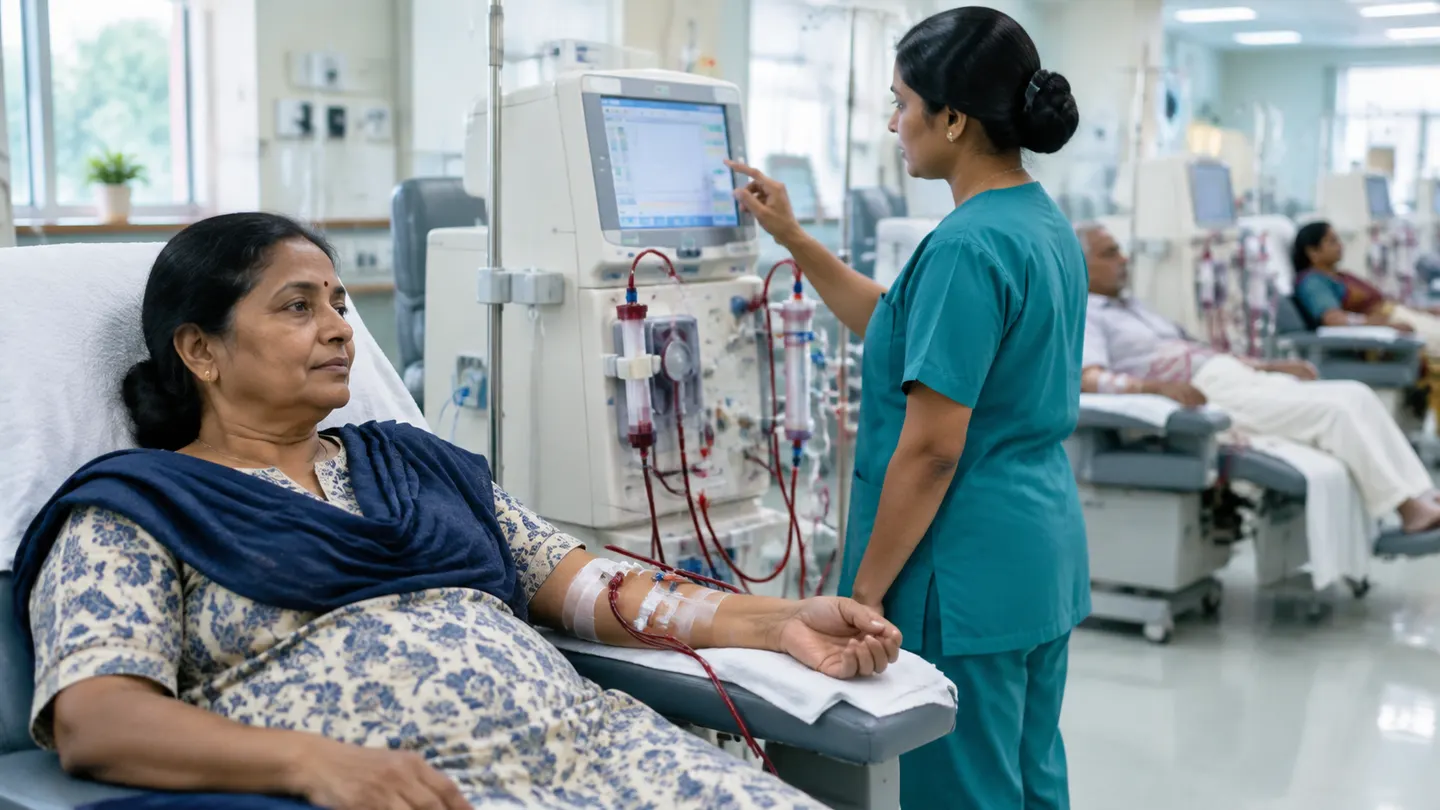
Greenview Medical Center runs a dialysis center in HSR Layout with 24 hour haemodialysis, supervised by a DM qualified nephrologist. We care for people on regular dialysis, those starting for the first time, patients who need emergency dialysis, and visitors to Bengaluru who need a session away from home. Our trained dialysis team, ICU and emergency are on the same campus. Call 080 6792 7777 to book a dialysis slot.
What is dialysis?
Dialysis is a treatment that does the work of the kidneys when they can no longer do it themselves. It removes waste, extra salt and water from the blood and keeps potassium and acid at safe levels. Dialysis does not cure kidney disease, but it allows people with kidney failure to live active lives, either long term or while waiting for a kidney transplant.
When is dialysis needed?
Dialysis is usually started when kidney function falls to about 10 to 15 percent of normal (CKD stage 5), or earlier if there are serious problems such as:
- Fluid build up causing breathlessness
- Dangerously high potassium
- Severe acid build up in the blood
- Nausea, vomiting, poor appetite or confusion from waste build up
Types of dialysis
| Type | Where it is done | How often | Who it suits |
|---|---|---|---|
| Haemodialysis | Dialysis center | Usually 3 sessions a week, about 4 hours each | Most people with kidney failure |
| Peritoneal dialysis | At home | Daily, several short exchanges or overnight by machine | People who prefer home treatment and can manage it |
| Emergency dialysis | Hospital | As needed | Sudden kidney failure or life threatening complications |
Haemodialysis
Blood flows from your body through a filter called a dialyser, which cleans it, and then returns to your body. The machine carefully controls how much fluid is removed.
Peritoneal dialysis
A soft tube is placed in the tummy, and a cleaning fluid is run in and out, using the lining of the tummy as a filter. It is done at home after training. Your nephrologist will explain whether it suits you.
Haemodialysis at Greenview
Our dialysis unit
- Open 24 hours, including nights, Sundays and holidays
- Nephrologist supervision and trained dialysis technicians and nurses
- Separate machines for patients with hepatitis B
- Water treatment that meets dialysis standards
- ICU, emergency and laboratory on the same campus
What happens during a session
Before the session
You are weighed and your blood pressure, pulse and temperature are checked. The nurse checks your access site.
During the session
Two needles are placed in your fistula, or your catheter is connected. Dialysis runs for about four hours. You can rest, read, watch videos or sleep. Your blood pressure is checked regularly.
After the session
The needles are removed and the site is pressed to stop bleeding. You are weighed again. Most people go home the same day and continue normal routines.
Dialysis access: fistula, graft and catheter
Haemodialysis needs a reliable way to reach your blood, called vascular access.
AV fistula
A surgeon joins an artery and vein in the arm to create a strong vein for dialysis. It is the safest and longest lasting option, but needs about 6 to 8 weeks or more to mature, so it should be made well before dialysis starts. Fistulas are created by our vascular surgeon in HSR Layout.
AV graft
A soft tube joins an artery and vein when your own veins are not suitable.
Dialysis catheter
A tube placed in a large vein in the neck or chest, used for urgent dialysis or while a fistula matures. Catheters carry a higher infection risk, so they are used for as short a time as possible.
Caring for your fistula
- Check daily for the buzzing feeling (thrill)
- Do not allow blood pressure checks, injections or blood tests on that arm
- Avoid tight sleeves, watches or sleeping on that arm
- Keep it clean and report redness, pain or loss of the buzz immediately
Emergency dialysis
Some people need dialysis urgently because of sudden kidney failure, very high potassium, fluid on the lungs, or severe poisoning. Our 24x7 emergency and ICU can start emergency dialysis at any hour. Learn more on our acute kidney injury treatment page.
Dialysis for visitors and travellers
If you are visiting Bengaluru, working near HSR Layout or Koramangala, or your regular unit is not available, we can arrange holiday dialysis. Please send these at least a few days in advance:
- A letter from your nephrologist with your dialysis prescription
- Recent viral marker reports (hepatitis B, hepatitis C and HIV)
- Recent blood test results
- Your access type and medicines list
Call or WhatsApp +91 96861 15772 to book.
Diet and fluids on dialysis
Dialysis diet is different from early kidney disease diet. Our nutrition team gives personal advice.
Fluids
Most people on haemodialysis need to limit fluids, as extra fluid builds up between sessions. Your team will give you a daily fluid target and a weight gain limit between sessions.
Salt
Low salt helps control thirst, swelling and blood pressure.
Protein
People on dialysis usually need more protein than before, because some is lost during dialysis. Eggs, fish, chicken, paneer and dal in the advised amounts help.
Potassium and phosphorus
Limit high potassium foods such as bananas, coconut water, oranges and potatoes, and high phosphorus foods such as colas and processed foods, as advised. You may need phosphate binder tablets with meals.
Living well on dialysis
Many people on dialysis work, travel and enjoy family life. To feel your best:
- Never skip or shorten sessions
- Keep to your fluid and diet advice
- Take medicines for blood pressure, anaemia and bones as prescribed
- Stay active with walking or light exercise
- Look after your fistula or catheter
- Talk to us about tiredness, low mood or sleep problems
Common side effects
Some people feel tired, have low blood pressure or muscle cramps during or after dialysis. Most of these can be reduced by adjusting your fluid removal and dialysis prescription.
Dialysis or kidney transplant?
A kidney transplant can offer more freedom and better long term health for suitable people. Dialysis keeps you well while you are evaluated or waiting. We help with transplant evaluation and follow up, while the surgery is done at a transplant centre.
Your dialysis team at Greenview
Dr. Nishchay B (MBBS, DM Nephrology) supervises dialysis care, supported by trained dialysis staff and Dr. Lalitha Somasundharan for diet planning. Meet our nephrologist in HSR Layout team.
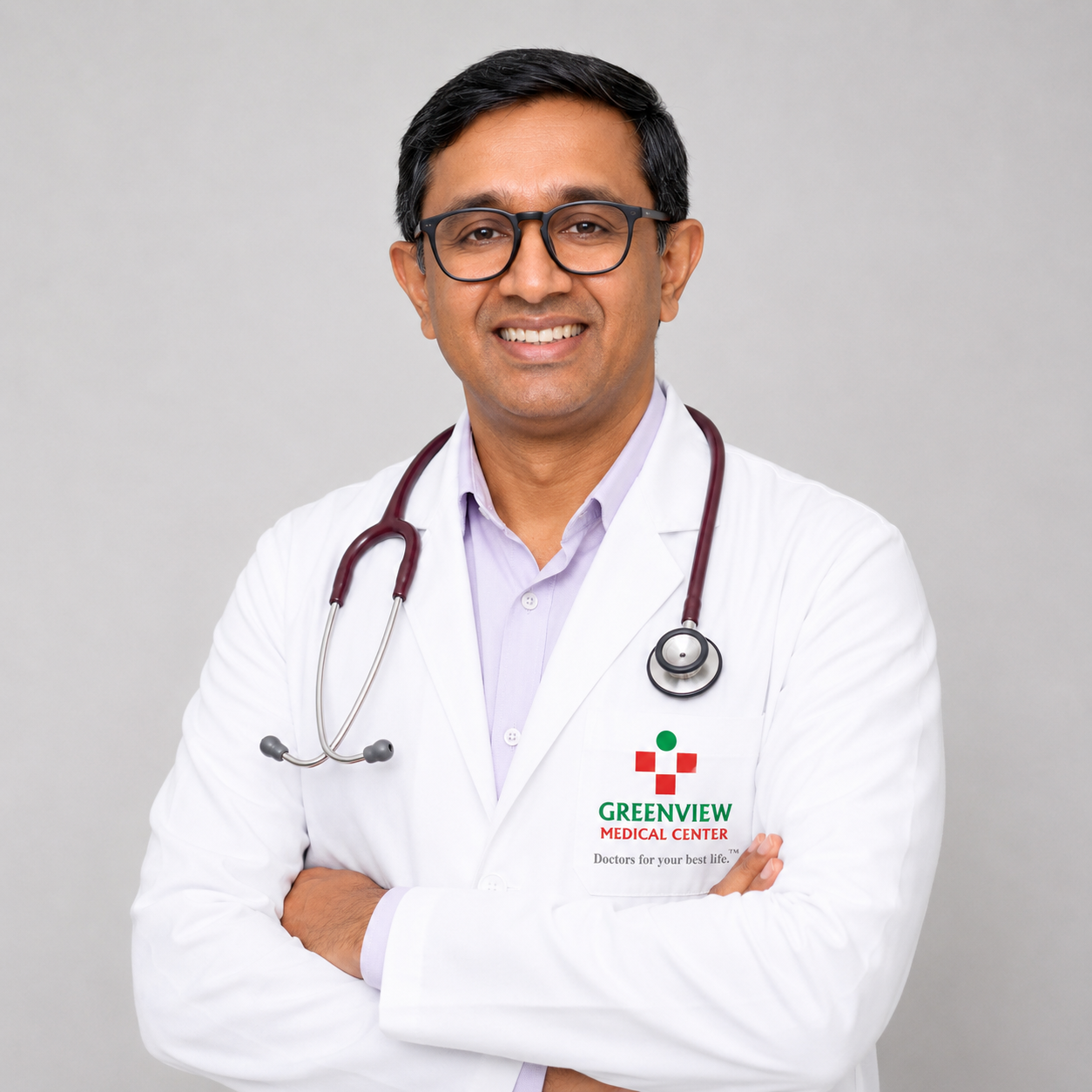
Dr. Nishchay B
Nephrologist · KMC 07646
MBBS, DM (Nephrology)
Consultation: On call. Please call to confirm a time.
View Dr. Nishchay B's profile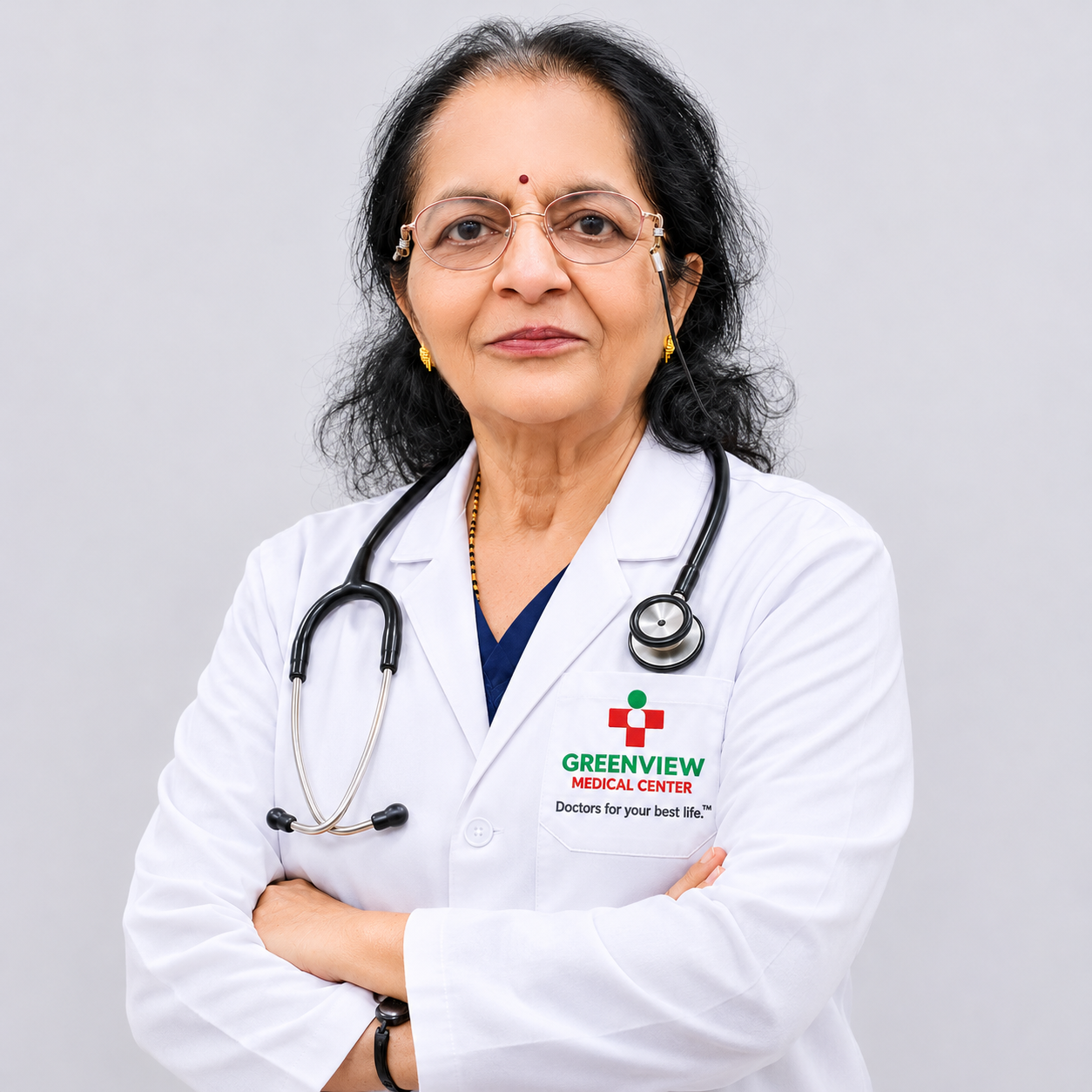
Dr. Lalitha Somasundharan
Nutrition & Dietetics
Nutrition & Dietetics
Consultation: 9:00 AM to 11:00 PM. Please call to confirm a time.
View Dr. Lalitha Somasundharan's profileCost and cashless insurance
The cost of dialysis depends on the number of sessions, medicines and consumables. We share costs in advance. Many insurance policies cover dialysis, and Greenview offers cashless treatment with 43 insurers and TPAs. See cashless insurance.
Frequently Asked Questions
How often is dialysis needed?
Most people on haemodialysis need three sessions a week. Your nephrologist may adjust this based on your blood tests and fluid levels.
How long does each dialysis session take?
A haemodialysis session usually takes about four hours, plus time to set up and finish.
Does dialysis hurt?
Dialysis itself does not hurt. You may feel a needle prick when the needles are placed in your fistula.
Is dialysis available at night at Greenview?
Yes. Our dialysis unit is open 24 hours, including nights and holidays.
Can I travel while on dialysis?
Yes. With planning, you can book dialysis in another city. We welcome visiting patients with the required reports.
What should I eat on dialysis?
Eat enough protein, limit salt, and control fluids, potassium and phosphorus as advised by your dietitian.
How long can someone live on dialysis?
Many people live for many years on dialysis. Health, age, other conditions and regular sessions all make a difference.
Can dialysis be stopped once started?
In sudden kidney injury, kidneys sometimes recover and dialysis can stop. In kidney failure from CKD, dialysis is usually long term unless you have a transplant.
What is the difference between haemodialysis and peritoneal dialysis?
Haemodialysis cleans the blood through a machine at a center, usually three times a week. Peritoneal dialysis uses the lining of the tummy and is done daily at home.
Is dialysis covered by insurance?
Many policies cover dialysis. Our insurance desk checks your policy and arranges cashless approval.
Book a dialysis slot
Greenview Medical Center, Opposite Agara Lake, Sector 5, HSR Layout, Bengaluru 560102. Open 24 hours. Call 080 6792 7777 or WhatsApp +91 96861 15772 to book at our dialysis center in HSR Layout.
Sources
- National Kidney Foundation: Dialysis
- NIDDK: Hemodialysis
- NHS: Dialysis
This page is for general information and does not replace a consultation with a doctor.