Vascular and Endovascular Surgery: Vascular Surgeon in HSR Layout
Vein and artery care opposite Agara Lake, Sector 5, HSR Layout.
Emergency: 24 × 7
If you need a vascular surgeon in HSR Layout, Greenview Medical Center offers specialist care for veins and arteries opposite Agara Lake in Sector 5. We diagnose and treat varicose veins, leg swelling, blood clots, blocked leg arteries, diabetic foot problems and dialysis access issues. Colour Doppler scanning is done on site, and our operation theatres, ICU and blood bank are on the same campus, with 24x7 emergency care. Call 080 6792 7777 to book.
Vascular care at Greenview at a glance
Greenview is a 55 bed, NABH accredited hospital serving Bengaluru for more than 20 years. For vein and artery care, you have:
- A fellowship trained vascular surgeon
- Colour Doppler ultrasound on site
- Care for 10 vein and artery conditions
- Operation theatres, ICU and blood bank on the same campus
- In-house laboratory, imaging and pharmacy
- Cashless treatment with 43 insurers and TPAs
- Emergency and ambulance service 24x7
| Speciality | Vascular and endovascular surgery: veins, arteries and dialysis access |
|---|---|
| Vascular surgeon | Dr. Hemanth Kumar Pandharpurkar (KMC 39324), MBBS, MS, MRCS, Fellowship in Vascular Surgery |
| Hospital OPD | 24/7 |
| Emergency | Emergency: 24 × 7 |
| On site | Colour Doppler ultrasound, operation theatres, ICU, blood bank, in-house laboratory, imaging and pharmacy |
| Hospital | 55 beds · NABH accredited · ISO 9001:2015 certified (register 01 100128107) |
| Cashless insurance | 43 insurers and TPAs |
| Address | 20 & 21, 14th Main Road, Opposite Agara Lake, Sector 5, 1st Block Koramangala, HSR Layout, Bengaluru, Karnataka 560102 |
| Phone and WhatsApp | 080 6792 7777 · WhatsApp +91 96861 15772 |
| appt@gvhcol.com |
What does a vascular surgeon treat?
A vascular surgeon treats diseases of the veins and arteries outside the heart and brain. This includes blood vessels in the legs, arms, neck and abdomen. Care ranges from medicines and lifestyle advice to minimally invasive procedures and open surgery.
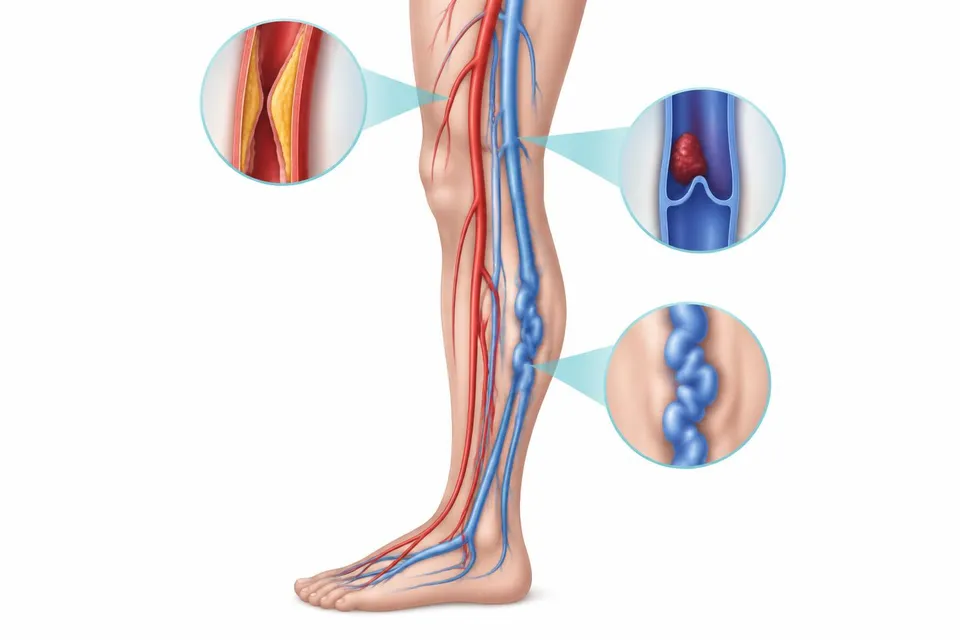
Vein problems
Varicose veins, chronic venous insufficiency, leg swelling, venous ulcers and deep vein thrombosis.
Artery problems
Narrowed or blocked leg arteries, poor circulation from diabetes, narrowed neck arteries and bulging arteries called aneurysms.
Dialysis access
Creating and maintaining fistulas and grafts for people who need kidney dialysis, working with our nephrology and dialysis team.
Warning signs of vascular disease
Vascular problems often start quietly. Recognising early signs allows simpler treatment and helps prevent serious complications such as ulcers, stroke or limb loss.
Leg pain while walking
Cramping in the calf, thigh or buttock that comes on with walking and eases with rest may mean narrowed leg arteries. Doctors call this claudication.
Swelling, heaviness and visible veins
Aching, heavy legs, ankle swelling by evening and bulging veins suggest varicose veins or vein valve weakness. Sudden swelling of one leg needs urgent assessment for a clot.
Wounds that do not heal and colour change
A sore on the foot or leg that does not heal in two weeks, cold or pale toes, or blackening of the skin can mean poor blood supply, especially in people with diabetes.
Stroke warning signs
Sudden face drooping, arm weakness or speech difficulty, even if it passes, can come from a narrowed neck artery. Call 080 6792 7777 immediately.
Conditions We Evaluate & Treat
Our vascular team assesses every patient in person, confirms the diagnosis with the right tests, and explains each treatment option clearly.
Varicose veins
Varicose veins are swollen, twisted veins, usually in the legs, caused by weak valves. They can ache, swell, itch and sometimes lead to skin changes. Treatment ranges from stockings to minimally invasive vein closure. Read about varicose veins treatment in HSR Layout.
Chronic venous insufficiency
When leg veins cannot return blood to the heart well, swelling, skin darkening and ulcers can develop. It is closely linked to varicose veins.
Deep vein thrombosis (DVT)
A blood clot in a deep leg vein causes pain, warmth and swelling, usually in one leg. It needs prompt treatment to prevent the clot reaching the lungs.
Peripheral arterial disease and limb threatening ischaemia
Narrowed leg arteries cause pain on walking. Severe blockage can cause pain at rest, wounds and gangrene, which needs urgent treatment to save the limb.
Diabetic vascular complications
Diabetes damages small and large blood vessels. Combined with nerve damage, this makes foot wounds slow to heal. Early vascular checks protect the feet.
Carotid artery disease
Narrowing of the neck arteries raises stroke risk. Treatment may include medicines or surgery to clear the artery.
Aortic and peripheral aneurysms
An aneurysm is a bulge in an artery wall. Most cause no symptoms and are found on scans. Large aneurysms may need repair.
Vascular access for dialysis
An arteriovenous fistula or graft gives reliable access for dialysis. We also treat fistulas that narrow or stop working.
Tests we use to check your blood vessels
Most vascular conditions can be diagnosed with quick, non invasive tests.
| Test | What it shows | Time taken |
|---|---|---|
| Colour Doppler ultrasound | Blood flow, valve leaks, clots and blockages | 20 to 45 minutes |
| Ankle brachial index (ABI) | Reduced blood flow to the legs | About 15 minutes |
| CT angiography | Detailed map of arteries before treatment | About 15 minutes plus preparation |
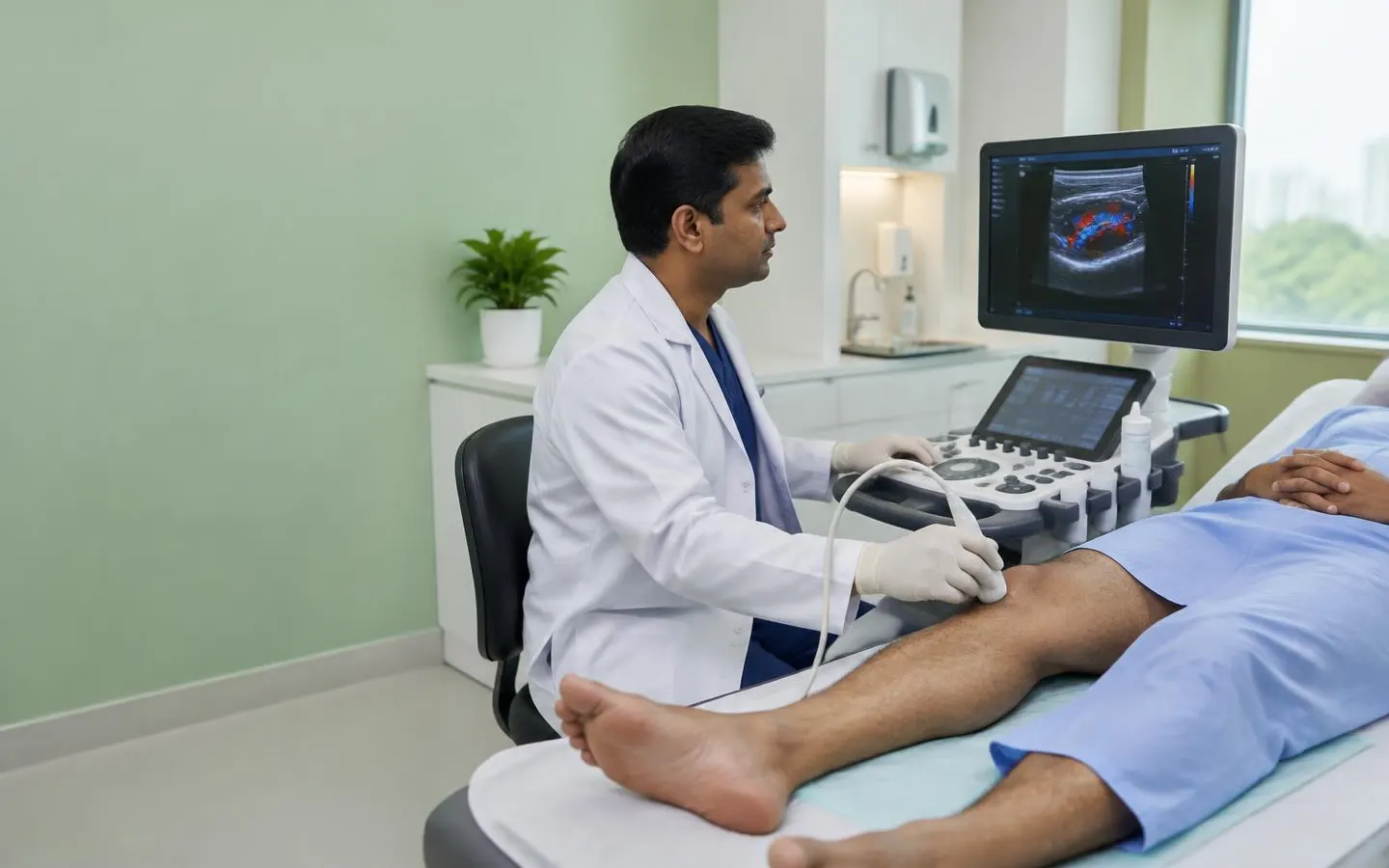
Colour Doppler ultrasound
Doppler uses sound waves, with no radiation, to show blood flow in real time. It is done on site at Greenview.
Venous Doppler
Checks vein valves for leaks in varicose veins and looks for clots in DVT.
Arterial Doppler
Shows narrowing or blockage in arteries of the legs, arms and neck.
Ankle brachial index (ABI)
Compares blood pressure at the ankle and arm. A low reading suggests narrowed leg arteries.
CT angiography
A scan with contrast dye that maps arteries in detail, used when planning procedures. Arranged through our radiology and diagnostics department.
Open and endovascular treatment options
Treatment depends on the condition and its severity. Many people start with medicines and lifestyle changes. When a procedure is needed, endovascular options work from inside the blood vessel through a small puncture, while open surgery is used when it is the safer or more durable choice.
Medicines and lifestyle care
Blood thinners, cholesterol and blood pressure medicines, diabetes control, stopping smoking, supervised walking and compression stockings form the base of vascular care.
Endovascular (minimally invasive) treatment
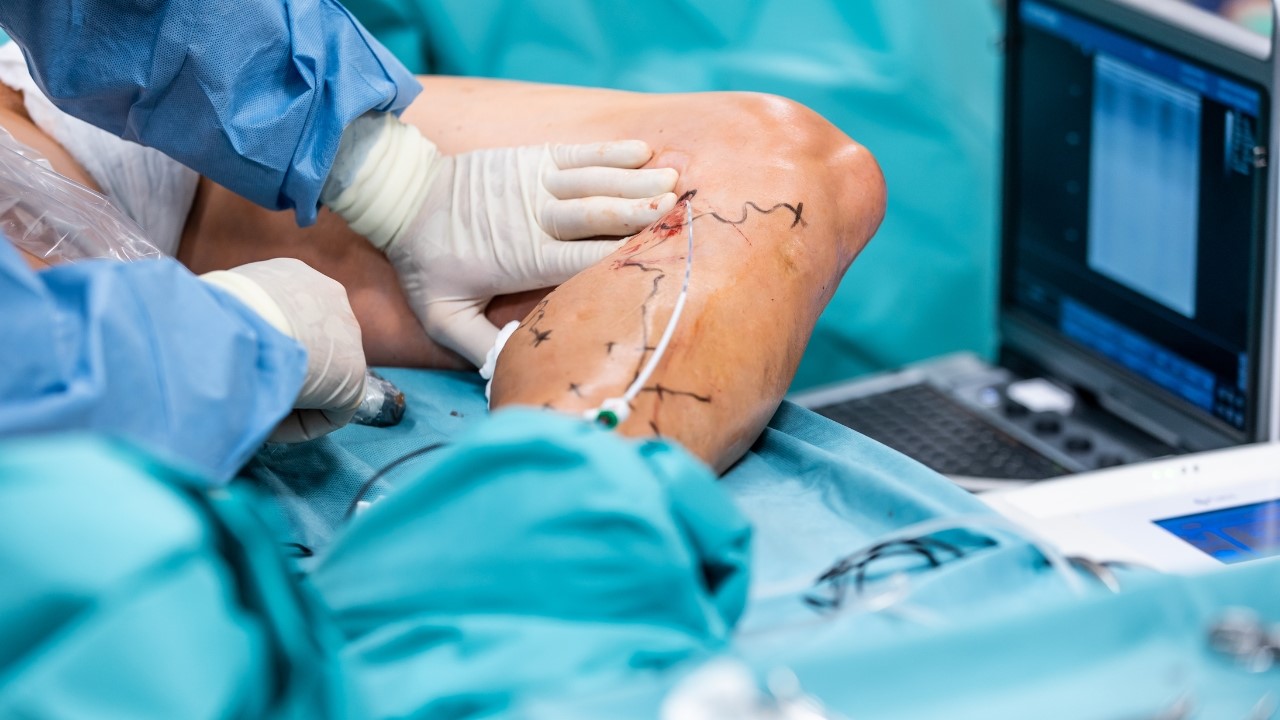
Vein ablation and sclerotherapy
For varicose veins, treatment may include sealing the faulty vein from inside with laser or radiofrequency heat, or injecting a solution to close smaller veins.
Angioplasty and stenting
A thin balloon, sometimes with a mesh tube called a stent, opens narrowed arteries through a small puncture in the groin.
Open vascular surgery
Bypass surgery, carotid surgery, aneurysm repair and fistula creation may be advised when they offer the better long term result.
How your first vascular consultation works
Your vascular surgeon reviews your symptoms, medical history and medicines, then examines your legs, pulses and skin. A colour Doppler scan can often be done the same day. You leave with a clear explanation and written plan. Please bring earlier scans, blood reports, a list of medicines and diabetes records.
Your vascular surgeon in HSR Layout
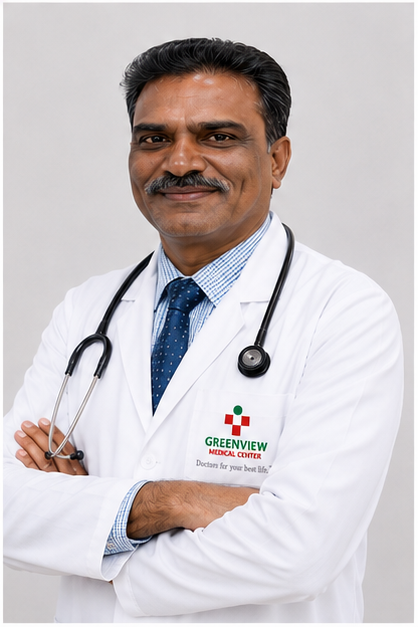
Dr. Hemanth Kumar Pandharpurkar
Vascular Surgeon · KMC 39324
MBBS, MS, MRCS, Fellowship in Vascular Surgery. Vascular surgeon treating vein and artery conditions, including varicose veins, DVT, peripheral arterial disease, diabetic foot and dialysis access.
Consultation: On call. Please call to confirm a time.
View profileWho is at higher risk of vascular disease?
- People with diabetes
- Smokers and tobacco users
- People with high blood pressure or cholesterol
- Adults over 50, or with a family history of vascular disease
- People with kidney disease
- Those who stand or sit for long hours
- People who are overweight or not physically active
If you have two or more of these, ask about a vascular check.
Cashless insurance, costs and admission
Greenview offers cashless treatment with 43 insurers and TPAs. Costs depend on tests, the procedure and length of stay. Our team shares a written estimate and starts pre authorisation before treatment. See cashless insurance or call 080 6792 7777.
Vascular emergencies: when to come in now
Come to our 24x7 emergency or call 080 6792 7777 for:
- Sudden swelling and pain in one leg
- Sudden breathlessness or chest pain, especially with leg swelling
- A cold, pale or painful leg or foot
- Blackening of toes or a rapidly worsening foot wound
- Sudden face drooping, arm weakness or speech difficulty
- Bleeding from a varicose vein that does not stop with pressure
Frequently Asked Questions
Is there a vascular surgeon in HSR Layout?
Yes. Greenview Medical Center, opposite Agara Lake in Sector 5, HSR Layout, has a fellowship trained vascular surgeon. Book online, call 080 6792 7777 or message on WhatsApp.
What does a vascular surgeon treat?
A vascular surgeon treats veins and arteries outside the heart and brain, including varicose veins, DVT, blocked leg arteries, diabetic foot circulation problems, aneurysms and dialysis access.
When should I see a vascular surgeon?
See a vascular surgeon for leg pain on walking, leg swelling, bulging veins, wounds that do not heal, or if you have diabetes with foot problems.
What is the difference between vascular and endovascular surgery?
Open vascular surgery works on blood vessels through an incision. Endovascular treatment works from inside the vessel through a small puncture, often with quicker recovery.
Is a colour Doppler test available at Greenview?
Yes. Colour Doppler ultrasound is done on site and can often be completed on the day of your consultation.
Why do my legs hurt when I walk?
Calf pain that starts with walking and settles with rest may mean narrowed leg arteries. A Doppler scan and ABI test can check this.
Is leg swelling a sign of a blood clot?
Sudden painful swelling of one leg can be a sign of DVT and needs urgent assessment. Swelling of both ankles by evening is more often due to vein weakness or other causes.
Do diabetics need a vascular check?
Yes. People with diabetes should have their foot pulses checked regularly, and anyone with a slow healing foot wound should see a vascular surgeon promptly.
Is vascular surgery covered by insurance?
Most medically needed vascular procedures are covered by health insurance. Our insurance desk checks your policy and arranges cashless approval.
What should I bring to my first appointment?
Bring photo ID, insurance card, earlier scans and reports, a list of medicines and diabetes records.
Speak with a vascular surgeon in HSR Layout
Greenview Medical Center, 20 & 21, 14th Main Road, Opposite Agara Lake, Sector 5, HSR Layout, Bengaluru 560102. Close to Koramangala, BTM Layout, Bellandur and Sarjapur Road. Call 080 6792 7777, WhatsApp +91 96861 15772, or book online.
Email: appt@gvhcol.com
Sources and medical information
- NHS: Peripheral arterial disease
- NHS: Deep vein thrombosis
- NICE guideline CG147: Peripheral arterial disease: diagnosis and management
This page is for general information and does not replace a consultation with a doctor.