Varicose Veins Treatment in HSR Layout, Bengaluru
Clear answers about bulging, aching leg veins, and a plan that fits your daily life.
Emergency: 24 × 7
Looking for varicose veins treatment in HSR Layout? Greenview Medical Center helps people with aching, swollen or bulging leg veins. Your visit starts with an examination and a venous colour Doppler scan on site. Then our vascular surgeon explains every suitable choice in plain words.
Options range from stockings and exercise to laser, radiofrequency or injection treatment. We are opposite Agara Lake in Sector 5, a short drive from Koramangala, BTM Layout, Bellandur and Sarjapur Road. Call 080 6792 7777 to book a vein consultation.
What are varicose veins?
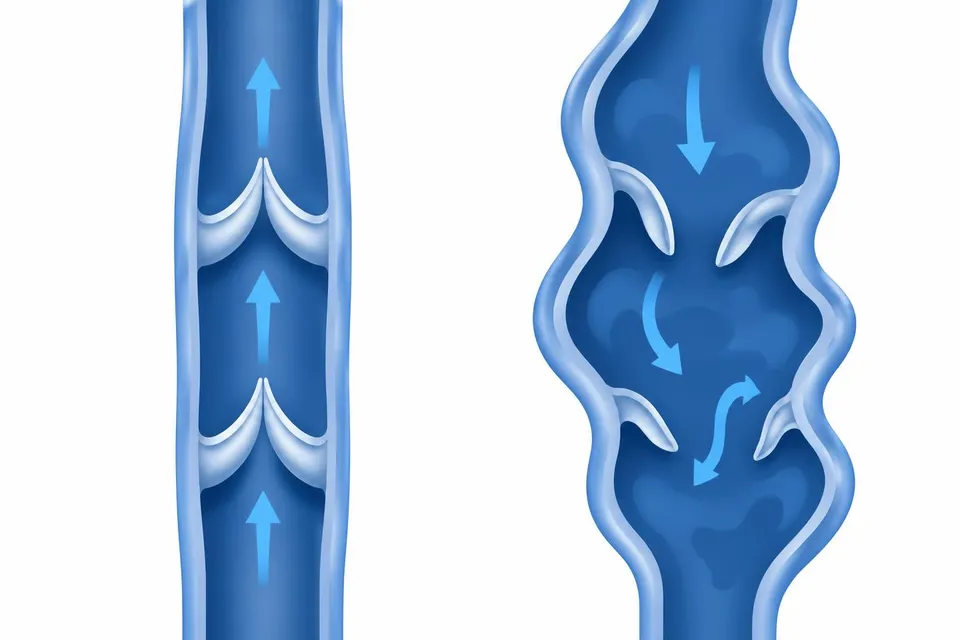
Varicose veins are enlarged, twisted veins just under the skin, most often on the calves and inner thighs. Tiny valves inside healthy veins keep blood flowing up towards the heart. When those valves weaken, blood pools, pressure rises and the vein stretches. They are common and usually not serious, though they can be uncomfortable.
The problem usually starts in the great or small saphenous vein. These surface veins run along the inner leg and the back of the calf.
Spider veins, varicose veins and chronic venous insufficiency
These three terms describe different stages of vein trouble. The table shows how they differ and what usually helps.
| Type | What you see | Symptoms | Usual treatment |
|---|---|---|---|
| Spider veins | Fine red, purple or blue lines in a web pattern | Usually none, sometimes mild itching | Reassurance, or sclerotherapy for cosmetic concern |
| Varicose veins | Raised, rope like veins wider than a pencil | Aching, heaviness, ankle swelling, night cramps | Stockings, then laser, radiofrequency, injection or surgery |
| Chronic venous insufficiency | Swollen ankles, brown or red skin, hard patches | Itching, tight skin, slow healing sores | Compression, skin care and treating the faulty vein |
Varicose veins symptoms
Many people first notice dark blue or purple veins that bulge when standing. Legs often feel heavy, tired or achy by evening. Ankles may swell, and calves can cramp or throb at night. Symptoms usually ease when you lie down with your legs raised, and they often worsen in hot weather.
- Bulging, twisted veins on the calf or thigh
- Aching, burning or heavy legs
- Swelling around the ankles
- Itching over the veins
- Restless legs or cramps at night
Skin changes and leg ulcers
Long standing high pressure in the veins can damage the skin near the ankle. The skin may turn brown, become dry and itchy, or feel hard and tight. Doctors call the itchy rash varicose eczema.
A small knock can then open a sore that heals slowly. A leg ulcer that has not healed within two weeks needs a vascular review. Our dermatology team can help with eczema while the vein is treated.
Causes and risk factors
Varicose veins develop when vein walls and valves weaken over time. Family history is one of the strongest links, so ask your parents about their legs. Age, female sex, pregnancy, extra body weight and long hours on your feet all add strain. A past deep vein clot can also damage valves.
Jobs that involve long hours of standing or sitting
Teachers, nurses, shop staff, security guards and cooks stand for most of the day. Software engineers and drivers often sit for hours without moving.
In both cases, calf muscles rest instead of pumping blood upwards. Short walks, calf raises and leg rests during breaks reduce the pooling.
Pregnancy and hormones
Blood volume rises in pregnancy, and the growing womb presses on pelvic veins. Pregnancy hormones also relax vein walls.
Veins that appear in pregnancy often settle within a few months of delivery. Hormone treatment may play a smaller role for some women.
Are varicose veins dangerous?
For most people, varicose veins are a comfort and appearance problem rather than a danger. Some develop complications over the years. These include skin damage, ulcers, bleeding from a thin vein and painful clots in surface veins. A specialist check helps you understand your own risk and the right timing for treatment.
When to see a varicose vein specialist in HSR Layout
Book a review if veins ache, swell or disturb your sleep. Come sooner if you see skin colour change, eczema or a sore near the ankle.
A vein that becomes hard, red and tender also needs a check. This may be superficial thrombophlebitis, a clot in a surface vein.
Signs that need urgent care
A varicose vein can bleed heavily after a small cut. Lie down, raise the leg above heart level and press firmly on the spot.
Then call 080 6792 7777 or come to our 24x7 emergency department. Seek urgent help too for sudden one sided calf pain and swelling, or sudden breathlessness.
How we diagnose varicose veins
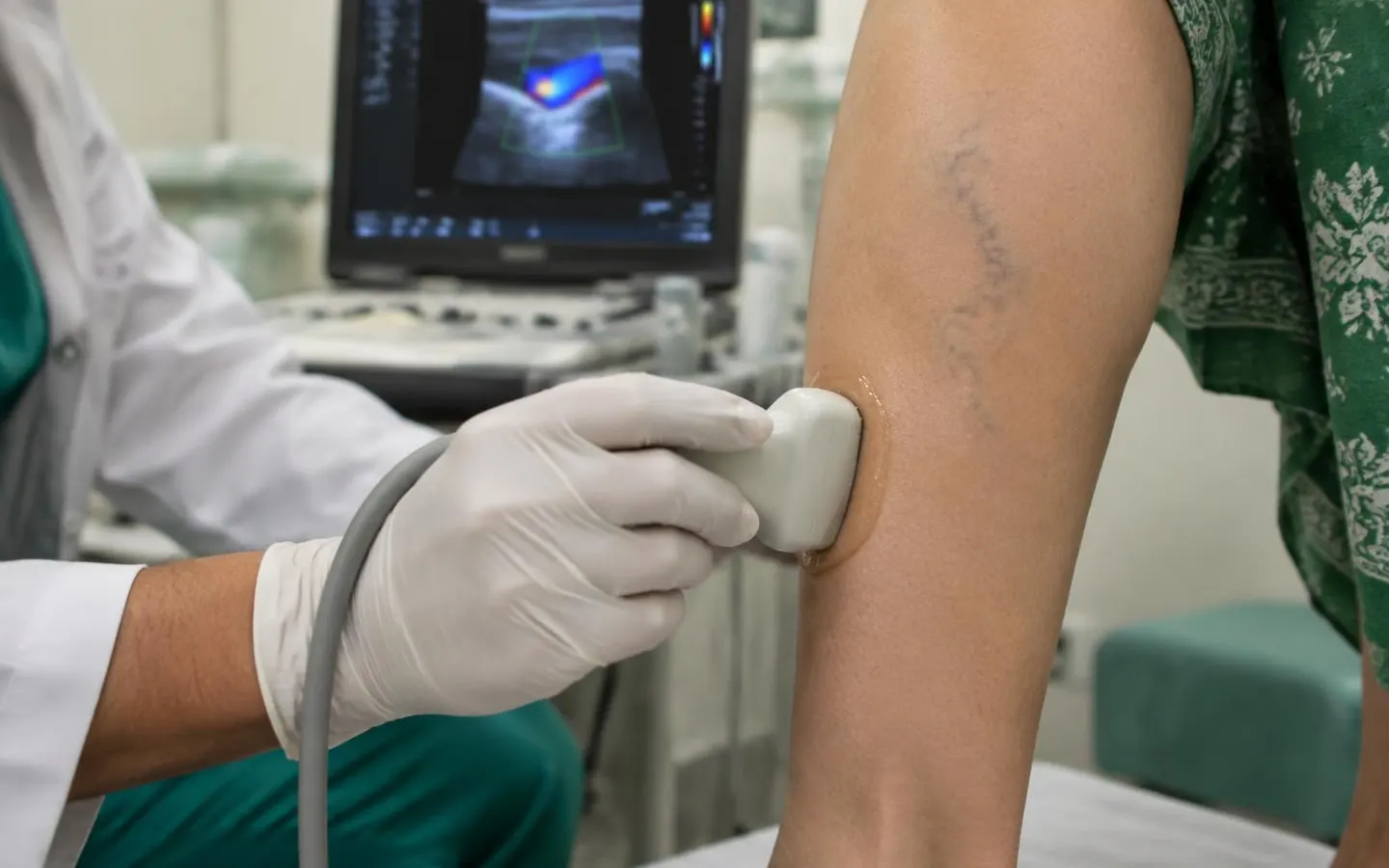
Diagnosis combines a careful examination with an ultrasound map of your leg veins. The examination shows where veins bulge and how the skin looks. The scan shows which valves leak and how far the leak runs. Together they guide a plan that targets the source, not only the veins you can see.
Examination
Your surgeon asks about symptoms, past clots, pregnancies and family history. You stand for the examination so the veins fill and show clearly.
We also check ankle pulses. Poor artery flow changes which stockings and treatments are safe.
Venous colour Doppler scan
The venous colour Doppler scan uses a gel and a handheld probe, with no needles or radiation. Blue and red colours on screen show the direction of blood flow.
A reflux test, done standing, shows backward flow through weak valves. The scan also checks the deep veins for old or new clots. Results are reviewed with you at the same visit where possible, supported by our radiology and diagnostics team.
Varicose veins treatment options in HSR Layout
Treatment depends on your symptoms, scan findings and skin health. Mild veins may only need self care and compression. When a leaking main vein causes symptoms, closing it from inside is now the usual first choice. Surgery remains an option for some veins. Your vascular surgeon explains each route before you decide.
| Treatment | Who it suits | Anaesthesia | Usual return to work |
|---|---|---|---|
| Compression stockings | Mild symptoms, pregnancy, or people not suited to a procedure | None | No time off |
| Endovenous laser ablation (EVLA) | Leaking saphenous vein confirmed on Doppler | Local anaesthetic around the vein | Often within a few days |
| Radiofrequency ablation (RFA) | Leaking saphenous vein confirmed on Doppler | Local anaesthetic around the vein | Often within a few days |
| Sclerotherapy | Spider veins, smaller branches or veins left after ablation | None needed in most cases | Usually the next day |
| Medical glue closure | Selected straight saphenous veins, where available | Local anaesthetic at the entry point | Often within a day or two |
| Surgery (ligation and stripping, phlebectomy) | Very twisted veins or veins unsuitable for closure | Spinal or general anaesthetic, or local for small phlebectomy | Often two to three weeks |
Self care and compression
Self care eases symptoms and protects the skin. It does not remove a vein that is already enlarged.
Compression stockings
Graduated stockings squeeze most at the ankle and less towards the knee. This helps blood move upwards and reduces swelling.
Put them on in the morning before swelling builds. Your surgeon checks your ankle pulses first and advises the right strength and size.
Exercise, leg elevation and weight
Walking, cycling and swimming work the calf pump. Raise your legs above hip level for short spells each day.
Losing extra weight lowers pressure in the leg veins. Avoid standing still for long periods where you can.
Minimally invasive vein treatments
These treatments work through a needle puncture guided by ultrasound. They are often planned as day care surgery, so most people go home the same day. Your surgeon will confirm which options suit your veins.
Endovenous laser ablation (EVLA)
A thin laser fibre passes into the faulty vein through a small puncture. Laser heat seals the vein shut from inside. Blood then reroutes through healthy veins.
People searching for laser treatment for varicose veins in Bangalore usually mean EVLA. Mild bruising and a pulling feeling along the thigh are common for a week or two.
Radiofrequency ablation (RFA)
RFA works in the same way as EVLA but uses radiofrequency energy instead of laser. A catheter heats the vein wall in short segments.
NICE guidance recommends heat based ablation such as EVLA or RFA as a first option for suitable veins.
Sclerotherapy
A fine needle injects a liquid or foam into the vein. It irritates the lining so the vein closes and fades over weeks.
Sclerotherapy suits spider veins and smaller branches. Some people need more than one session.
Medical glue closure
A medical adhesive is placed inside the vein to seal it, without heat. Fewer anaesthetic injections are needed.
It may be considered for selected straight veins. Ask your surgeon whether it is suitable and available for you.
Surgery for varicose veins
Open surgery ties off the leaking vein near the groin or knee and removes it through small cuts. Very twisted surface branches can be lifted out through tiny nicks, called phlebectomy.
Varicose veins surgery in Bangalore is now chosen less often than vein closure. It still helps when a vein is too twisted or too wide for a catheter. It takes place in our operation theatres.
What to expect on treatment day and during recovery
Most vein closure treatments take about an hour, and you can walk straight afterwards. Expect some tightness, bruising and tenderness along the treated vein for a week or two. Walking every day speeds recovery. Your surgeon gives you written instructions about stockings, pain relief and the follow up scan.
On the day
Eat a light meal unless told otherwise, and wear loose trousers. The surgeon marks your veins with a pen while you stand.
Numbing medicine is injected along the vein under ultrasound guidance. You stay awake and can talk throughout. A bandage or stocking goes on straight after.
The first two weeks
Walk for at least ten minutes every few hours from the first day. Avoid long flights, heavy lifting and hot baths for about two weeks.
Simple pain relief usually controls discomfort. A follow up Doppler checks that the vein has closed. Call us if calf pain, swelling or redness gets worse.
Varicose veins in pregnancy
Varicose veins often appear or worsen during pregnancy, especially in the later months. They are usually harmless and many improve after the baby arrives. Procedures are normally delayed until after delivery and breastfeeding plans are clear. Meanwhile, maternity compression stockings, rest with raised legs and gentle walking help with heaviness and swelling.
Some women also notice vulval or pelvic veins that ache by evening. Your obstetrics and gynaecology doctor and vascular surgeon can plan care together.
Sudden swelling of one leg in pregnancy needs urgent review for a deep vein clot. Do not wait for your next antenatal visit.
Can varicose veins come back?
Yes, new varicose veins can appear years after successful treatment. The treated vein stays closed in most people, but other weak veins can enlarge with time. Family history, pregnancy and long hours of standing keep adding strain. Regular activity, healthy weight and early review of new symptoms help keep your legs comfortable.
A follow up scan can show whether new veins come from a fresh leak or a branch. Small recurrences often respond to sclerotherapy.
Your varicose vein specialist at Greenview
Dr. Hemanth Kumar Pandharpurkar leads vein care at Greenview. He holds MBBS, MS and MRCS degrees and a fellowship in vascular surgery. His work covers varicose veins, chronic venous insufficiency treatment, clots and leg artery disease. He reviews your scan himself and explains each treatment choice before you agree to anything.
Read Dr. Hemanth Kumar Pandharpurkar's profile or call to check his next available time. Appointments are arranged on call, so please book ahead.
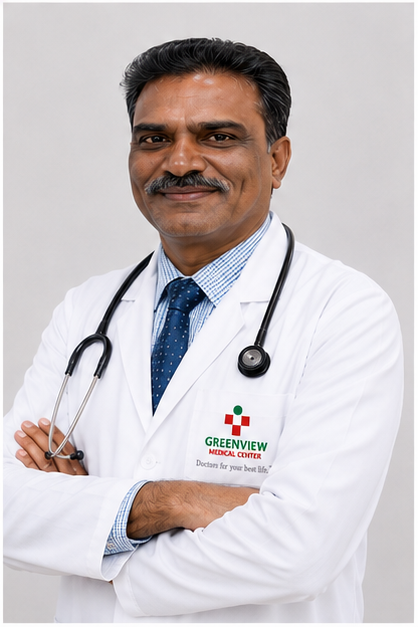
Dr. Hemanth Kumar Pandharpurkar
Vascular Surgeon · KMC 39324
MBBS, MS, MRCS, Fellowship in Vascular Surgery
Consultation: On call. Please call to confirm a time.
View profileCost and cashless insurance for varicose veins treatment
The cost of treatment depends on the scan, the method chosen, one or both legs and any stay. We give you a written estimate after your consultation. Greenview works with 43 insurers and TPAs for cashless care. Policies usually cover treatment for symptoms or skin changes, but rarely purely cosmetic spider vein care.
Bring your insurance card and photo identity. Our desk checks waiting periods and starts pre approval. Read more about cashless insurance.
Frequently Asked Questions
These are the questions people ask most often before a vein consultation in HSR Layout. Each answer gives general guidance from national guidelines and our surgical team. It cannot replace an examination and a Doppler scan of your own legs. Write down any other questions and bring them to your appointment.
Can varicose veins be treated without surgery?
Yes. Most varicose veins today are treated without open surgery. Laser or radiofrequency ablation seals the faulty vein through a needle puncture under local anaesthetic. Sclerotherapy injections close smaller veins. Compression stockings and exercise ease symptoms when a procedure is not needed or not suitable for you.
Is laser treatment for varicose veins better than surgery?
For a suitable leaking saphenous vein, NICE recommends heat based ablation such as laser before surgery. Laser usually means less pain, smaller wounds and a quicker return to routine. Surgery still suits some very twisted or wide veins. Your Doppler scan decides which method fits your legs.
How long is recovery after laser treatment for varicose veins?
You walk straight after laser treatment and go home the same day. Many people return to desk work within a few days. Bruising and a tight feeling along the thigh settle over one to two weeks. Wear stockings as advised and avoid heavy exercise for about two weeks.
Are varicose veins dangerous?
Usually not. Most varicose veins cause aching and swelling rather than harm. Over years, some lead to skin damage, ulcers, bleeding or clots in surface veins. Sudden pain and swelling of one leg needs urgent care. A deep vein clot can travel to the lungs.
Do varicose veins come back after treatment?
A treated vein usually stays closed, but new varicose veins can form in other weak veins over the years. Your family history and daily habits play a part. Staying active, managing weight and getting early checks for new symptoms help. Small new veins can often be treated with injections.
Do compression stockings cure varicose veins?
No. Stockings ease aching and swelling and protect the skin, but they do not close or remove enlarged veins. They help in pregnancy and for people not suited to a procedure. Check with your doctor before using them, as they can be unsafe with poor artery circulation.
Can varicose veins be treated during pregnancy?
Procedures are usually postponed until after delivery, because many veins shrink once the baby is born. During pregnancy, maternity compression stockings, leg elevation and gentle walking relieve heaviness. Sudden swelling or pain in one leg while pregnant needs urgent assessment for a deep vein clot.
What is the difference between spider veins and varicose veins?
Spider veins are tiny red or purple lines that lie flat in the skin. They rarely cause symptoms and are mostly a cosmetic concern. Varicose veins are larger, raised and twisted, and often ache or swell. They usually come from a leaking valve in a deeper surface vein.
Is varicose veins treatment covered by insurance?
Most health policies cover varicose vein treatment when it is medically needed for symptoms, swelling, skin change or ulcers. Purely cosmetic spider vein treatment is rarely covered. Greenview offers cashless care with 43 insurers and TPAs. Our insurance desk checks your policy and arranges pre approval before treatment.
Which doctor should I see for varicose veins?
See a vascular surgeon, a doctor trained in vein and artery disease. A varicose veins doctor near me search often lists general clinics, so check training first. At Greenview, Dr. Hemanth Kumar Pandharpurkar holds a fellowship in vascular surgery. He offers Doppler scans and vein treatment planning under one roof.
Book a vein consultation
Ready to discuss varicose veins treatment in HSR Layout? Book an appointment online, call 080 6792 7777 or message us on WhatsApp. Tell us about your symptoms and any earlier scans. We confirm a time with Dr. Hemanth Kumar Pandharpurkar. Where possible, we arrange your Doppler scan on the same visit.
Sources
This page follows national guidance and patient information from trusted medical bodies. NICE CG168 sets out how varicose veins should be assessed and treated. The NHS and the Society for Vascular Surgery explain symptoms and treatment choices for patients. Your own plan always depends on your examination and scan.