
Infertility in Women and Men: Infertility Treatment in HSR Layout
Medically reviewed by Dr. Achi Ashok, MBBS, MD (OBG) [AIIMS], Dip. in Reproductive Medicine (Germany) | Last reviewed:
Emergency: 24 × 7
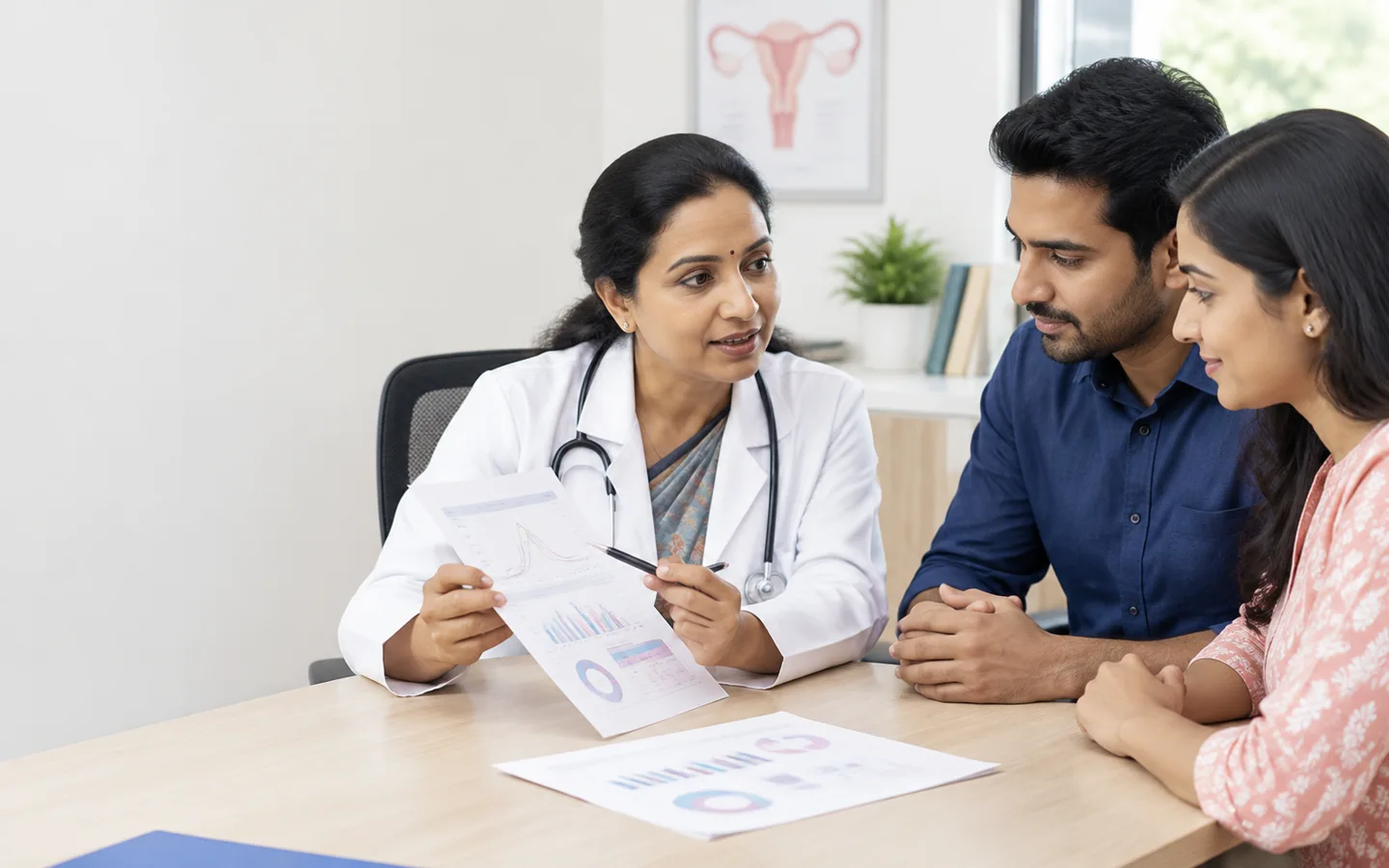
Infertility is common and is a medical condition, not anyone's fault. The World Health Organization estimates that about 1 in 6 people worldwide are affected at some point in their lives. Greenview Medical Center offers infertility treatment in HSR Layout for both women and men, starting with simple tests for both partners to find the cause. Many couples conceive with straightforward treatment. Call 080 6792 7777 to book a private consultation.
What is infertility?
Infertility means not becoming pregnant after 12 months of regular unprotected intercourse, or after 6 months if the woman is 35 or older. It can be primary (never conceived) or secondary (difficulty conceiving after a previous pregnancy). Infertility can come from the woman, the man, both, or no clear cause at all.
Common causes at a glance
| Cause | Who | Main tests | Common treatments |
|---|---|---|---|
| Ovulation problems (PMOS, thyroid, prolactin) | Women | Hormone tests, ultrasound | Lifestyle, ovulation induction, IUI |
| Blocked or damaged tubes | Women | HSG, sonography, laparoscopy | Surgery or IVF |
| Uterine problems (fibroids, polyps, septum, scarring) | Women | Ultrasound, hysteroscopy | Hysteroscopic or keyhole surgery |
| Low egg reserve | Women | AMH test, follicle count | IVF, earlier treatment, egg freezing |
| Low sperm count or motility | Men | Semen analysis, hormones | Lifestyle, medicines, varicocele repair, IUI, ICSI |
| Unexplained | Couple | All tests normal | IUI or IVF |
Infertility in women
Ovulation problems
If an egg is not released regularly, pregnancy is harder. Common causes include Polyendocrine Metabolic Ovarian Syndrome (PMOS), thyroid problems, high prolactin, being very underweight or overweight, and too much intense exercise or stress. Irregular or missed periods are a common sign.
Polyendocrine Metabolic Ovarian Syndrome (PMOS)
PMOS is one of the most common causes of irregular ovulation. It may cause irregular periods, acne, extra hair growth and weight gain. Many women with PMOS conceive with weight management and ovulation induction medicines.
Blocked or damaged fallopian tubes
The tubes carry the egg to meet sperm. They can be blocked or damaged by previous pelvic infections, genital tuberculosis, endometriosis or earlier surgery. Blocked tubes may be treated with surgery or bypassed with IVF.
Endometriosis
Endometriosis can affect the tubes, ovaries and egg quality and cause painful periods. Treatment may include surgery and fertility treatment. Read about endometriosis treatment.
Problems inside the uterus
Fibroids, polyps, a septum or scar tissue inside the uterus can affect implantation. Many can be treated with hysteroscopy, without any cuts on the tummy.
Age and egg reserve
A woman is born with all her eggs. Their number and quality fall gradually from the early 30s and more quickly after 35. The AMH blood test and an ultrasound follicle count help estimate the egg reserve. There is no single normal AMH value; it is read alongside your age.
Premature ovarian insufficiency
In some women, the ovaries stop working normally before 40. Early assessment helps plan treatment options.
Infertility in men
Male factors contribute in many couples, yet men are often tested late. A semen analysis is simple, quick and one of the first tests we advise.
Low sperm count and poor motility
A low number of sperm, sperm that do not move well, or abnormally shaped sperm can make conception harder. Many men have no symptoms.
No sperm in the semen
Azoospermia means no sperm are seen in the semen. It can be due to a blockage or a problem with sperm production. Further tests help find the cause and options.
Varicocele
Enlarged veins in the scrotum can affect sperm production. Repair may improve sperm count and quality. Read about varicocele treatment.
Hormone and other causes
Hormone imbalances, previous infections such as mumps, undescended testes, some medicines, and problems with erection or ejaculation can all affect fertility.
Lifestyle factors in men
Smoking, alcohol, being overweight, anabolic steroids, frequent hot baths or saunas, and keeping laptops on the lap for long periods can lower sperm quality. Sperm take about three months to develop, so lifestyle changes need time to show results.
Unexplained infertility
In some couples, all standard tests are normal. This is called unexplained infertility. It does not mean nothing can be done. Many couples conceive with time, IUI or IVF.
Recurrent pregnancy loss
Two or more pregnancy losses can be very distressing. Tests may look at the uterus, hormones, blood clotting conditions and chromosomes of both partners. In many cases, a cause is not found, and the chance of a successful future pregnancy is still good with supportive care.
Tests for infertility
For women
- Hormone blood tests, including AMH, FSH, LH, thyroid and prolactin
- Pelvic ultrasound and follicle tracking scans
- Tube tests such as HSG (an X-ray dye test) or saline sonography
- Hysteroscopy or laparoscopy when needed
For men
- Semen analysis, repeated if abnormal
- Hormone tests
- Scrotal ultrasound if needed
Most tests are done in our in-house laboratory and imaging department.
Infertility treatment options in HSR Layout
We always start with the simplest effective treatment for your situation.
Lifestyle changes
Reaching a healthy weight, stopping smoking, cutting down alcohol, eating well and managing stress can improve fertility for both partners. Women planning pregnancy should take folic acid.
Medicines
Ovulation induction tablets or injections help women who do not ovulate regularly. Thyroid and prolactin problems are treated with medicines. Some hormone problems in men can also be treated.
IUI
Washed sperm is placed in the uterus at the time of ovulation. IUI may help with mild male factor, ovulation problems and unexplained infertility.
IVF and ICSI
IVF may be advised for blocked tubes, low egg reserve, severe male factor, endometriosis, or when other treatments have not worked. ICSI helps when sperm count or quality is very low. Learn more on our fertility clinic in HSR Layout page.
Surgery
Hysteroscopy and keyhole surgery treat uterine and pelvic problems. Varicocele repair can help some men.
Fertility preservation
People facing cancer treatment, or women wishing to delay pregnancy, may ask about freezing eggs, sperm or embryos. Your doctor will explain what is suitable.
Improving your chances naturally
- Have regular intercourse every two to three days through the cycle
- Keep a healthy weight
- Stop smoking and limit alcohol
- Take folic acid if you are a woman trying to conceive
- Get thyroid and diabetes checked and controlled
- Avoid long hot baths and tight underwear for men
Emotional wellbeing
Infertility can affect relationships, work and self esteem. It is normal to feel sad, anxious or frustrated. Talk openly with your partner, take breaks between treatment cycles if you need, and ask for support. Our counselling team can help.
Your fertility team at Greenview
Dr. Achi Ashok (MBBS, MD OBG [AIIMS], Dip. Reproductive Medicine) leads infertility care, working with our IVF, urology and gynaecological surgery teams. Meet our fertility clinic in HSR Layout team.
Cost and insurance
The cost depends on the tests and treatment needed. We share a written estimate before treatment. IUI and IVF are often not covered by health insurance, but some policies include them, and fertility related surgery may be covered. See cashless insurance.
Frequently Asked Questions
What are the most common causes of infertility in women?
Ovulation problems such as PMOS, blocked fallopian tubes, endometriosis, uterine problems and falling egg reserve with age.
What are the most common causes of male infertility?
Low sperm count, poor sperm movement, abnormal sperm shape, varicocele, hormone problems and lifestyle factors.
Can low sperm count be treated?
Often, yes. Lifestyle changes, medicines, varicocele repair, IUI or ICSI can help depending on the cause.
Can I get pregnant with PMOS?
Yes. Many women with PMOS conceive with weight management and ovulation induction. IVF is an option if these do not work.
What is a normal AMH level?
AMH varies with age, so there is no single normal number. Your doctor reads it together with your age and ultrasound.
Can I get pregnant after 35?
Yes, many women do. Fertility falls with age, so it is wise to seek advice after 6 months of trying.
Which tests are needed for infertility?
Hormone tests, a pelvic ultrasound and a tube test for the woman, and a semen analysis for the man.
Is infertility always the woman's problem?
No. Male factors contribute in many couples, so both partners should be tested.
What is unexplained infertility?
When all standard tests are normal. Many couples still conceive with time, IUI or IVF.
Is infertility treatment covered by insurance?
Tests and fertility related surgery may be covered. IUI and IVF depend on your policy.
Book a private consultation
Greenview Medical Center, Opposite Agara Lake, Sector 5, HSR Layout, Bengaluru 560102. Call 080 6792 7777 or WhatsApp +91 96861 15772 for infertility treatment in HSR Layout.
Sources
- World Health Organization: Infertility
- NICE guideline CG156: Fertility problems: assessment and treatment
- NHS: Infertility
This page is for general information and does not replace a consultation with a doctor.