

Hydrocele and Varicocele Treatment in HSR Layout, Bengaluru
Medically reviewed by Dr. V H Ashwath Venkataramana, MBBS, MS (General Surgery), MRCS (Edinburgh), MCh (Urology) | Published and last reviewed:
Private assessment of scrotal swelling, with short procedures when treatment is needed.
Emergency: 24 × 7
A swelling or heavy feeling in the scrotum is common and usually not serious, but it should be checked. Greenview Medical Center offers hydrocele and varicocele treatment in HSR Layout, starting with a private examination and a scrotal Doppler ultrasound. Many cases only need monitoring. When treatment is needed, hydrocele surgery and varicocele repair are short procedures, often done as day care. Our urologists also assess varicocele as a cause of male infertility. Call 080 6792 7777 to book.
Hydrocele and varicocele: what is the difference?
Both cause swelling in the scrotum, but they are different conditions with different treatments.
| Feature | Hydrocele | Varicocele |
|---|---|---|
| What it is | Fluid collecting around the testicle | Enlarged, twisted veins above the testicle |
| How it feels | Smooth, soft swelling, often painless | Lumpy, like a bag of worms, often on the left |
| Symptoms | Heaviness, size can be embarrassing | Dull ache, worse when standing or by evening |
| Effect on fertility | Usually none | Can lower sperm count and quality |
| Common in | Newborns and older men | Teenagers and young men |
| Main treatment | Watchful waiting or hydrocele surgery | Supportive care or varicocele repair |
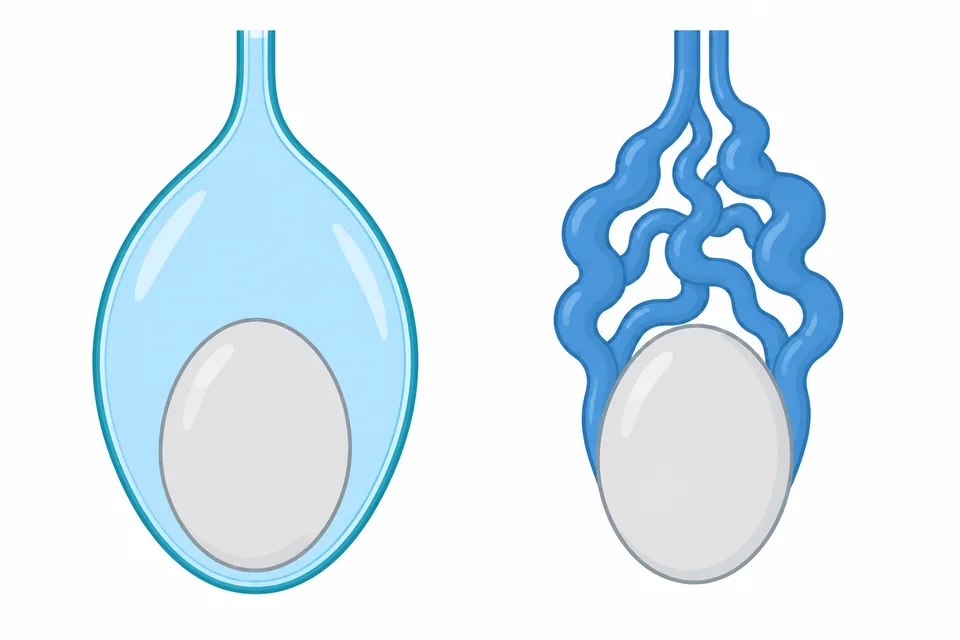
Hydrocele
What is a hydrocele?
A hydrocele is a collection of fluid in the thin sac around the testicle. It makes one or both sides of the scrotum look larger. Most hydroceles are harmless, but large ones can be heavy, uncomfortable and affect walking or clothing.
Types of hydrocele
A communicating hydrocele has a small opening to the abdomen, so the size may change during the day. It is common in babies. A non communicating hydrocele has no opening and usually develops in adult men after minor injury, infection or for no clear reason.
Hydrocele symptoms
- Painless, smooth swelling of the scrotum
- A heavy or dragging feeling
- Swelling that grows slowly over months
- Discomfort when walking, sitting or during intercourse if large
Pain, redness or a hard lump with the swelling needs prompt assessment, as these suggest another cause.
Hydrocele in babies and children
Hydroceles are common in newborn boys and most disappear by one to two years of age without treatment. A hydrocele that persists, changes size, or comes with a groin hernia is assessed by our paediatric surgery team, as a small operation may be advised.
Varicocele
What is a varicocele?
A varicocele is a cluster of swollen veins in the scrotum, similar to varicose veins in the legs. It happens when valves in the veins draining the testicle do not work well, so blood pools. Varicoceles are common, affecting many teenage boys and young men, and usually appear on the left side. Although they involve veins, varicoceles are treated by urologists.
Varicocele symptoms
- A lumpy feeling above the testicle, often described as a bag of worms
- A dull ache or heaviness, worse after standing, exercise or by evening
- Relief when lying down
- A smaller testicle on the affected side
- Difficulty conceiving
Many varicoceles cause no symptoms and are found during a fertility check.
Varicocele grades
Varicoceles are graded by size. Grade 1 is felt only when straining, grade 2 is felt while standing, and grade 3 is visible through the skin. Some small varicoceles are seen only on ultrasound.
Varicocele and male fertility
Varicocele is one of the most common treatable causes of male infertility. Pooled blood can warm the testicle and affect sperm production. If a couple is trying to conceive and the man has a varicocele with an abnormal semen analysis, repair may improve sperm count and quality. Our urologists work with our male infertility care team to plan the right approach.
Scrotal swelling that needs urgent care
Some scrotal problems are emergencies. Come to our 24x7 emergency or call 080 6792 7777 if you have:
- Sudden, severe pain in a testicle, which may be testicular torsion and needs surgery within hours
- A swollen, red, hot scrotum with fever
- Swelling after an injury
- A swelling in the groin that cannot be pushed back, with vomiting
Also see a urologist soon for any hard lump in the testicle itself, or a varicocele that appears suddenly on the right side or does not empty when lying down, as these need further tests.
How we diagnose scrotal swelling
Examination
Your urologist examines you privately, lying and standing, and may shine a light through the scrotum. Light usually passes through a hydrocele but not through solid lumps. You may be asked to cough or strain to check for a varicocele or hernia.
Scrotal Doppler ultrasound
Ultrasound shows the testicles clearly, confirms fluid or enlarged veins, measures blood flow and rules out other causes such as a tumour. It is quick and uses no radiation.
Semen analysis
For men with a varicocele who are planning a family or have difficulty conceiving, a semen analysis checks sperm count, movement and shape. It is repeated after treatment to measure improvement.
Hydrocele and varicocele treatment options in HSR Layout
Hydrocele treatment
Watchful waiting
Small, painless hydroceles in adults can simply be monitored. Treatment is advised if the hydrocele is large, uncomfortable, growing or affecting daily life.
Hydrocele surgery (hydrocelectomy)
Hydrocelectomy drains the fluid and stitches or removes the sac so the fluid does not collect again. It is done through a small cut in the scrotum under spinal or general anaesthesia, usually takes 30 to 45 minutes, and most men go home the same day or next morning. It is done in our operation theatres.
Why draining with a needle is rarely advised
Removing fluid with a needle gives only short relief, as the fluid usually returns within weeks, and repeated drainage carries a risk of infection and bleeding. It is used only for men who cannot have surgery.
Varicocele treatment
Supportive care
Most varicoceles without pain, testicular shrinkage or fertility problems need no treatment. Supportive underwear, avoiding long periods of standing and simple pain relief help mild discomfort.
Microsurgical varicocelectomy
Repair is advised for ongoing pain, a shrinking testicle in teenagers, or infertility with an abnormal semen analysis. Microsurgical varicocelectomy uses an operating microscope through a small groin cut to tie off the faulty veins while protecting the artery and lymph vessels. This approach has a low chance of the varicocele returning and of fluid collecting afterwards.
Laparoscopic repair and embolisation
In some cases, the veins are tied by keyhole surgery, or blocked from inside by an interventional radiologist using a thin tube passed through a vein, called embolisation. Your urologist will advise which approach suits you.
Recovery after hydrocele or varicocele surgery
Most men go home the same day. Wear supportive underwear and use cold packs for the first two days to reduce swelling. Mild swelling and bruising are common and settle over two to four weeks. Most men return to desk work in three to seven days, and avoid heavy lifting, cycling and intercourse for about two weeks. After varicocele repair, a semen analysis is repeated after about three to six months, as new sperm take around three months to develop.
Your urologist at Greenview
Our urologists, Dr. V H Ashwath Venkataramana and Dr. Narasimhaiah, assess and treat scrotal swelling, hydrocele and varicocele, including fertility related cases. Your consultation is private and confidential. Meet our urologist in HSR Layout team.

Dr. V H Ashwath Venkataramana
Urologist · KMC 119804
MBBS, MS (General Surgery), MRCS (Edinburgh), MCh (Urology)
Consultation: 4:30 PM. Please call to confirm a time.
View Dr. V H Ashwath Venkataramana's profile
Dr. Narasimhaiah
Urologist · KMC 39419
MBBS, MS, MCh
Consultation: 10:30 AM. Please call to confirm a time.
View Dr. Narasimhaiah's profileCost and cashless insurance
The cost depends on the procedure, anaesthesia and length of stay. We share a written estimate beforehand. Medically needed hydrocele and varicocele surgery is usually covered by health insurance, and Greenview offers cashless treatment with 43 insurers and TPAs. See cashless insurance.
Frequently Asked Questions
Is a hydrocele dangerous?
A hydrocele is usually harmless. It should still be checked to rule out other causes of swelling, and treated if it is large or uncomfortable.
Can a hydrocele go away without surgery?
In babies, most hydroceles disappear by age one or two. In adults, small hydroceles may stay stable, but they rarely go away completely on their own.
How long is recovery after hydrocele surgery?
Most men return to desk work within a week. Swelling settles over two to four weeks.
Can a hydrocele come back after surgery?
It is uncommon after surgery. It is much more likely to return after needle drainage.
What causes a varicocele?
Weak valves in the veins that drain the testicle let blood pool and the veins enlarge. It is more common on the left because of how the left vein drains.
Does varicocele cause infertility?
It can reduce sperm count and quality in some men. Many men with a varicocele father children without treatment.
Should every varicocele be operated?
No. Surgery is advised for pain, a shrinking testicle in teenagers, or infertility with an abnormal semen analysis.
How long after varicocele surgery does sperm count improve?
Improvement is usually seen three to six months after surgery, as new sperm take about three months to develop.
Is a hydrocele in a newborn normal?
Yes. Hydroceles are common in newborn boys and usually disappear on their own. A paediatric surgeon checks those that persist or change in size.
Is hydrocele or varicocele surgery covered by insurance?
Most policies cover medically needed surgery. Our insurance desk checks your policy and arranges cashless approval.
Book a private consultation
Greenview Medical Center, Opposite Agara Lake, Sector 5, HSR Layout, Bengaluru 560102. Call 080 6792 7777 or WhatsApp +91 96861 15772 for hydrocele and varicocele treatment in HSR Layout.
Email: appt@gvhcol.com
Sources
- NHS: Hydrocele
- NHS: Varicocele
- Urology Care Foundation: Urology health information
This page is for general information and does not replace a consultation with a doctor.