
Appendicitis Treatment in HSR Layout, Bengaluru
Severe tummy pain? Call 080 6792 7777. Emergency open 24x7.
Emergency: 24 × 7
Appendicitis is a common cause of sudden tummy pain that needs quick medical care. Greenview Medical Center offers appendicitis treatment in HSR Layout 24 hours a day, with fast examination, blood tests and scans, and keyhole surgery to remove the appendix when needed. Most people go home within one to two days and return to normal life within a couple of weeks. If you have severe tummy pain, call 080 6792 7777 or come straight to our emergency.
What is appendicitis?
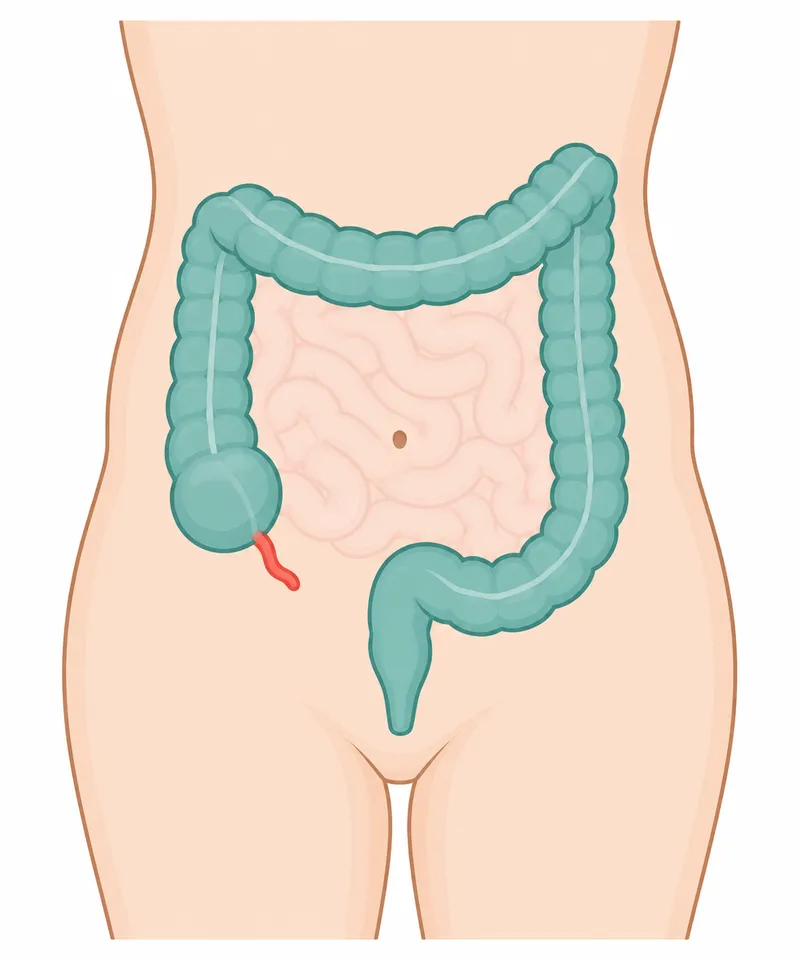
The appendix is a small, finger shaped pouch attached to the large bowel on the lower right side of the tummy. Appendicitis happens when the appendix becomes blocked, swollen and infected. If it is not treated, the appendix can burst and spread infection inside the tummy, which is serious. This is why appendicitis is treated as an emergency.
Who gets appendicitis?
Appendicitis can happen at any age, but it is most common between 10 and 30 years. It is one of the most common reasons for emergency tummy surgery in children and young adults.
Appendicitis symptoms
The most typical sign is pain that starts around the belly button and then moves to the lower right side of the tummy over several hours.
- Pain that gets steadily worse over 6 to 24 hours
- Pain that is worse when you move, cough, walk or go over bumps in a vehicle
- Loss of appetite
- Nausea or vomiting
- Mild fever
- Constipation or loose stools
- Feeling generally unwell
Which side is appendix pain?
Appendix pain usually settles in the lower right side of the tummy. In some people, especially children, older adults and pregnant women, the pain may be in a different place or less typical, so any severe, worsening tummy pain should be checked.
Appendicitis in children
Children may not describe pain clearly. Watch for tummy pain with vomiting, fever, refusing food, not wanting to walk or jump, or lying very still. We work with our paediatrics and paediatric surgery teams.
Appendicitis in pregnancy
In pregnancy, the appendix moves higher as the womb grows, so pain may be felt higher on the right side. Appendicitis in pregnancy needs urgent care, and we coordinate with our obstetrics team.
When to go to the emergency
Come to our 24x7 emergency or call 080 6792 7777 straight away if you have:
- Tummy pain that keeps getting worse over a few hours
- Pain in the lower right tummy with fever or vomiting
- Pain that suddenly spreads across the whole tummy
- A hard, swollen tummy
- Fever with shivering and fast heartbeat
Do not eat or drink, and do not take strong painkillers or laxatives before you are seen, as they can hide symptoms or delay surgery.
How appendicitis is diagnosed
There is no single test for appendicitis. Doctors combine your symptoms, an examination and tests.
Examination
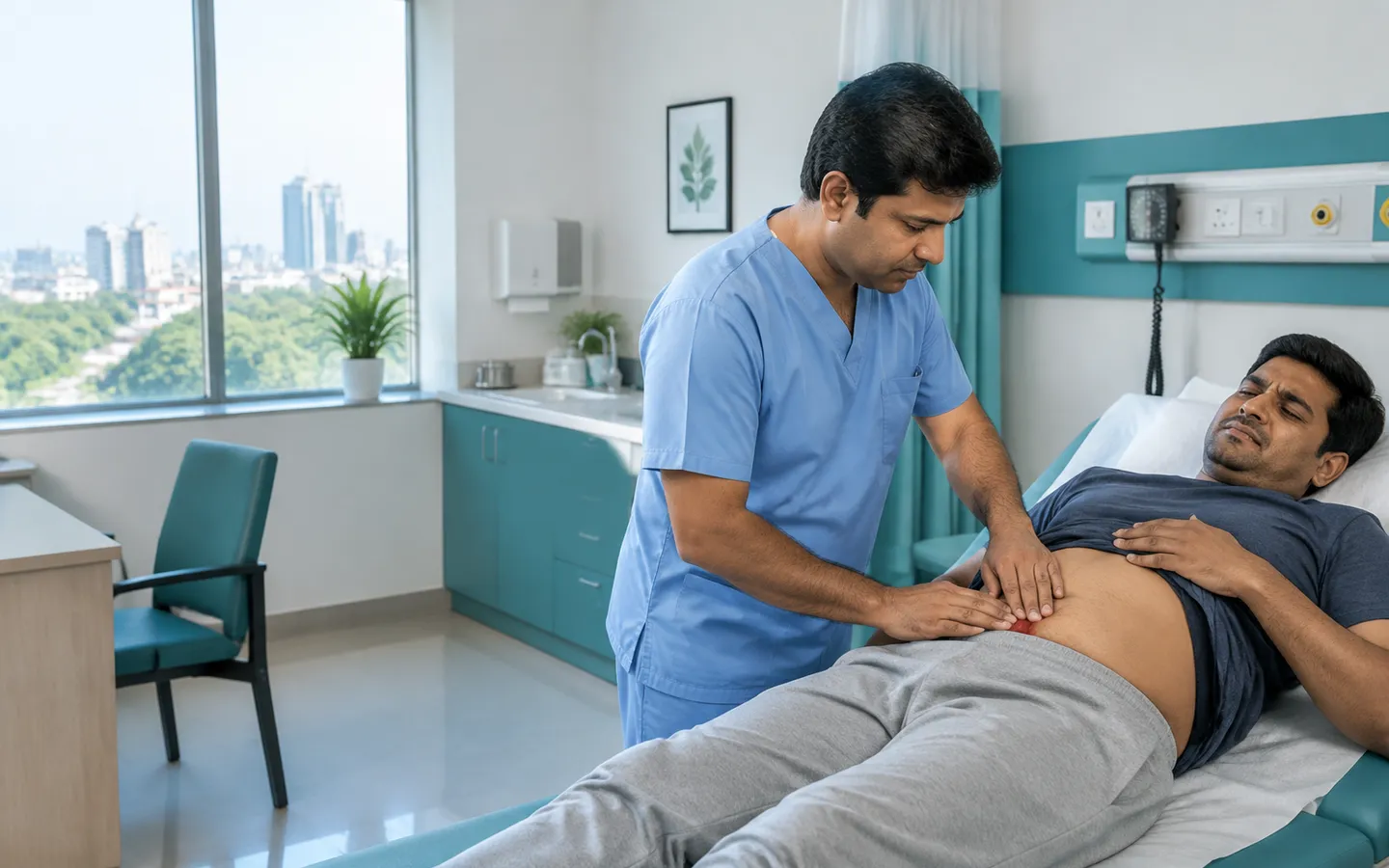
The doctor gently presses on your tummy to find where it is most tender and checks for signs of infection.
Blood and urine tests
Blood tests look for signs of infection. A urine test rules out a urine infection or kidney stone. Women may have a pregnancy test.
Ultrasound and CT scan
Ultrasound is used first in children and pregnant women, as it has no radiation. A CT scan gives a clearer picture in adults and can show if the appendix has burst. Scans are done in our radiology department.
Other conditions that can look like appendicitis
Kidney stones, urine infections, ovarian cysts, ectopic pregnancy, gastroenteritis and swollen glands in the tummy can cause similar pain. Tests help tell them apart.
Appendicitis treatment options in HSR Layout
Treatment depends on how severe the appendicitis is and your general health.
| Situation | Usual treatment | Usual hospital stay |
|---|---|---|
| Simple appendicitis | Keyhole appendix removal | 1 to 2 days |
| Burst (perforated) appendix | Surgery with antibiotics and washout | 3 to 7 days |
| Abscess around the appendix | Antibiotics and drainage, surgery later if needed | Several days |
| Mild, selected cases | Antibiotics alone in some adults, with close follow up | 1 to 3 days |
Laparoscopic appendectomy (keyhole surgery)
This is the most common treatment. The appendix is removed through 3 small cuts using a camera and fine instruments.
How the operation is done
The operation is done under general anaesthesia in our operation theatres and usually takes 30 to 60 minutes. The tummy is gently filled with gas, the appendix is tied off and removed, and the cuts are closed with small stitches.
Benefits of keyhole surgery
Compared with open surgery, keyhole surgery usually means less pain, smaller scars, a lower wound infection risk and a faster return to normal activity.
Open appendectomy
Sometimes a single larger cut on the lower right tummy is used, for example if the appendix has burst with a lot of infection. Rarely, a keyhole operation is changed to open surgery for safety.
Antibiotics without surgery
For some adults with mild, uncomplicated appendicitis, antibiotics alone may settle the infection. However, appendicitis can come back later, and some people still need surgery. Your surgeon will explain whether this option is suitable and safe for you.
Recovery after appendix surgery
In hospital
Most people walk the same day or the next morning and start eating and drinking soon after surgery. Pain is controlled with simple painkillers.
At home
- Keep wounds clean and dry for 2 days, then shower normally
- Walk a little every day
- Avoid heavy lifting for about 2 to 4 weeks
- Return to school or desk work in about 1 to 2 weeks
- Recovery takes longer if the appendix had burst
When to call us after surgery
Call 080 6792 7777 if you have fever, increasing tummy pain, redness or discharge from a wound, repeated vomiting or swelling of the tummy.
Life without an appendix
You can live a completely normal life without an appendix. It has no essential role in digestion, and you do not need any special diet afterwards.
Your appendicitis surgeon at Greenview
Our surgeons, including Dr. Arun Kumar and Dr. Shirisha V, treat appendicitis at any hour, supported by emergency, radiology, operation theatre and ICU teams on one campus. Meet our general surgeon in HSR Layout team.

Dr. Arun Kumar
General Surgeon · KMC 30059
MBBS, DNB, FICS, FIAS
Consultation: 7:30 PM · On call. Please call to confirm a time.
View Dr. Arun Kumar's profile
Dr. Shirisha V
General Surgeon · KMC 131161
MBBS, MS (General Surgery)
Consultation: 10:30 AM to 12:30 PM. Please call to confirm a time.
View Dr. Shirisha V's profileCost and cashless insurance
The cost depends on whether keyhole or open surgery is needed, whether the appendix has burst, and the length of stay. In emergencies, treatment starts first while our insurance desk handles approval. Appendix surgery is usually covered by health insurance, and Greenview offers cashless treatment with 43 insurers and TPAs. See cashless insurance.
Frequently Asked Questions
What are the early signs of appendicitis?
Pain near the belly button that moves to the lower right tummy, loss of appetite, nausea and mild fever are the most common early signs.
Which side is appendix pain on?
Usually the lower right side of the tummy. It can feel different in children, older adults and pregnant women.
Can appendicitis be treated without surgery?
Some adults with mild appendicitis can be treated with antibiotics, but it may come back. Surgery is still the most common and reliable treatment.
How quickly can the appendix burst?
The risk rises the longer appendicitis goes untreated, often after 24 to 48 hours. This is why prompt care matters.
How long does appendix surgery take?
Keyhole appendix surgery usually takes 30 to 60 minutes.
How long is recovery after appendix surgery?
Most people go home in 1 to 2 days and return to desk work or school in 1 to 2 weeks.
Can I eat normally after appendix removal?
Yes. Start with light meals and return to your normal diet within a few days.
Will I have scars?
Keyhole surgery leaves 3 small scars that fade over time.
Is appendicitis surgery safe in children?
Yes. It is one of the most common operations in children and is done with child appropriate anaesthesia and care.
Is appendix surgery covered by insurance?
Most health insurance policies cover appendix surgery. Our insurance desk arranges cashless approval.
Get help now
Greenview Medical Center, Opposite Agara Lake, Sector 5, HSR Layout, Bengaluru 560102. Emergency open 24x7. Call 080 6792 7777 or WhatsApp +91 96861 15772 for appendicitis treatment in HSR Layout.
Sources
- NHS: Appendicitis
- MedlinePlus: Appendicitis
- NIDDK: Appendicitis
This page is for general information and does not replace a consultation with a doctor.