

A hernia is a bulge that appears when part of the bowel or fat pushes through a weak spot in the tummy wall. Hernias do not heal on their own and often grow over time. Greenview Medical Center offers hernia surgery in HSR Layout for groin, belly button and scar hernias, including keyhole (laparoscopic) mesh repair with a short hospital stay. Our surgeons explain when surgery is needed and when it is safe to wait. Call 080 6792 7777 to book.
What is a hernia?
The tummy wall is made of muscle and strong tissue that holds the organs in place. If an area becomes weak, the lining of the tummy, fat or a loop of bowel can push through and form a soft bulge under the skin. Weak spots may be present from birth or develop with age, heavy lifting, straining, pregnancy or previous surgery.
Types of hernia
| Type | Where it appears | Who gets it most |
|---|---|---|
| Inguinal hernia | Groin, sometimes into the scrotum | Men of all ages |
| Femoral hernia | Upper thigh, just below the groin | Women, older adults |
| Umbilical hernia | At or near the belly button | Babies, adults after pregnancy or weight gain |
| Incisional hernia | Through a scar from earlier surgery | People with previous tummy operations |
| Epigastric hernia | Middle of the upper tummy | Adults |
Inguinal hernia
The most common type, making up most hernias in adults. It causes a bulge in the groin that may go down into the scrotum in men.
Femoral hernia
Less common but more likely to get trapped, so it is usually repaired soon after diagnosis.
Umbilical and incisional hernias
Umbilical hernias appear at the belly button. Incisional hernias appear through the scar of a previous operation, such as a caesarean section.
Hiatus hernia
A hiatus hernia is different. Part of the stomach moves up into the chest, causing heartburn rather than a visible bulge. It is usually treated with medicines, and is assessed by our GI team.
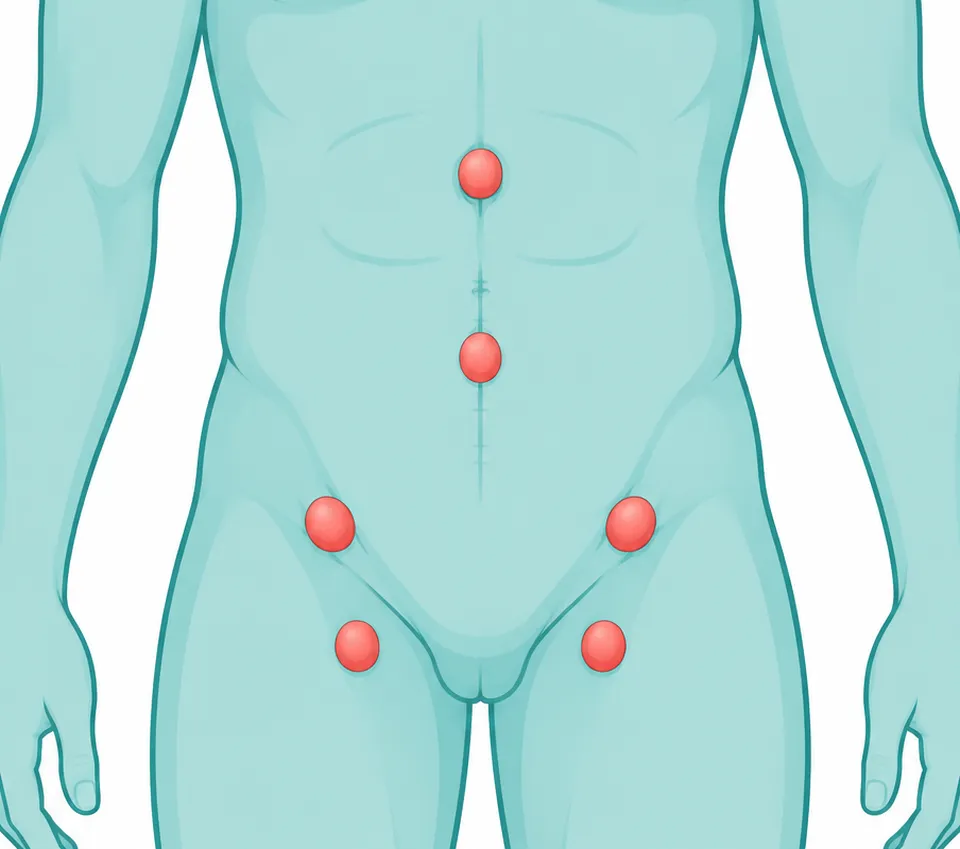
Hernia symptoms
- A bulge in the groin, near the belly button or along a scar
- The bulge gets bigger when you stand, cough or strain, and may go down when you lie down
- A heavy, dragging or aching feeling
- Discomfort when lifting, bending or exercising
- Swelling in the scrotum in men
Some hernias cause no pain and are noticed only as a lump.
When is a hernia an emergency?
A hernia can become trapped (incarcerated) or lose its blood supply (strangulated). This is a surgical emergency. Come to our 24x7 emergency or call 080 6792 7777 if:
- The bulge becomes painful, hard or tender
- You cannot push the bulge back in
- The skin over it turns red or dark
- You have vomiting, a swollen tummy or cannot pass gas or stools
What causes a hernia?
- Weak tummy wall from birth
- Heavy lifting or physical work
- Long term cough or straining to pass stools or urine
- Pregnancy
- Being overweight
- Previous tummy surgery
- Getting older
How a hernia is diagnosed
Examination
Most hernias are diagnosed by a simple examination. The surgeon checks the bulge while you stand and lie down, and asks you to cough.
Ultrasound or CT scan
A scan may be used if the hernia is small, hard to feel, or to plan surgery for a large or scar hernia.
Can a hernia heal without surgery?
No. A hernia will not close on its own, and belts or trusses only hold it in without fixing it. For small inguinal hernias in men that cause no symptoms, careful watching may be safe for a time. Most hernias grow, and surgery is the only lasting treatment. Your surgeon will help you decide on the right timing.
Hernia surgery options in HSR Layout
Modern hernia repair usually uses a soft mesh to strengthen the weak area, which lowers the chance of the hernia coming back.
| Method | How it is done | Usual stay | Back to desk work |
|---|---|---|---|
| Laparoscopic (keyhole) mesh repair | Camera and tools through 3 small cuts | Same day or 1 night | About 1 week |
| Open mesh repair | One cut over the hernia | Same day or 1 to 2 nights | About 1 to 2 weeks |
| Repair of large scar hernias | Keyhole or open, depending on size | 2 to 4 days | 2 to 4 weeks |
Laparoscopic hernia repair
The surgeon repairs the hernia from inside the tummy wall through small cuts and places a mesh over the weak area. Common methods are called TEP and TAPP.
Who it suits
Keyhole repair suits most groin hernias, hernias on both sides, and hernias that have come back after open surgery.
Benefits
It usually means less pain after surgery, small scars and a quicker return to work and exercise.
Open hernia repair
The surgeon makes one cut over the hernia, pushes the tissue back in place and stitches a mesh to strengthen the area. It can be done under general, spinal or local anaesthesia, and suits many patients, including some who are not fit for general anaesthesia.
Umbilical and incisional hernia repair
Small umbilical hernias may be repaired with stitches alone. Larger umbilical and scar hernias usually need mesh, by keyhole or open surgery.
Hernia in children
Hernias in babies and children are repaired by our paediatric surgery team. Many belly button hernias in babies close on their own by age 4 or 5.
Preparing for hernia surgery
You will have blood tests and a check by the anaesthetist. Tell your doctor about all medicines, especially blood thinners. Stop smoking if you can, as it improves healing. If you have a long term cough or constipation, getting these treated lowers the risk of the hernia coming back.
Recovery after hernia surgery
The first few days
Most people walk the same day and go home the same day or the next morning. Mild pain and swelling are normal and are eased with painkillers.
Back to normal
- Walk daily from the first day
- Return to desk work in about 1 to 2 weeks
- Drive when you can brake firmly without pain, usually after 1 to 2 weeks
- Avoid heavy lifting and strenuous exercise for about 4 to 6 weeks
- Eat fibre and drink water to avoid straining
When to call us
Call 080 6792 7777 for fever, increasing pain, redness or discharge from the wound, or difficulty passing urine.
Can a hernia come back after surgery?
A hernia can come back in a small number of people. Mesh repair, healthy weight, not smoking, and avoiding heavy lifting during recovery all lower this risk.
Your hernia surgeon at Greenview
Our surgeons, including Dr. Arun Kumar and Dr. Shirisha V, perform keyhole and open hernia repairs in our operation theatres. Meet our general surgeon in HSR Layout team.

Dr. Arun Kumar
General Surgeon · KMC 30059
MBBS, DNB, FICS, FIAS
Consultation: 7:30 PM · On call. Please call to confirm a time.
View Dr. Arun Kumar's profile
Dr. Shirisha V
General Surgeon · KMC 131161
MBBS, MS (General Surgery)
Consultation: 10:30 AM to 12:30 PM. Please call to confirm a time.
View Dr. Shirisha V's profileCost and cashless insurance
The cost depends on the type of hernia, the method of repair, the mesh used and the length of stay. We share a written estimate before admission. Hernia surgery is usually covered by health insurance, and Greenview offers cashless treatment with 43 insurers and TPAs. See cashless insurance.
Frequently Asked Questions
What are the symptoms of a hernia?
A bulge in the groin, belly button or a scar that gets bigger when standing or coughing, often with a dragging or aching feeling.
Can a hernia heal without surgery?
No. A hernia does not close on its own. Surgery is the only lasting treatment.
Is a hernia dangerous?
Most hernias are not dangerous at first, but they can become trapped and cut off blood supply, which is an emergency.
Is laparoscopic hernia surgery better?
Keyhole surgery usually means less pain and a quicker recovery. Open surgery is also safe and effective. Your surgeon will advise which suits you.
How long is recovery after hernia surgery?
Most people return to desk work in 1 to 2 weeks and to heavy lifting after 4 to 6 weeks.
Is mesh safe for hernia repair?
Mesh is widely used and lowers the chance of the hernia coming back. Your surgeon will explain the benefits and risks.
Can I wear a hernia belt instead of surgery?
A belt may ease symptoms for a short time but does not fix the hernia or stop it from growing.
Can a hernia come back after surgery?
It can in a small number of people. Following recovery advice lowers the risk.
Can women get hernias?
Yes. Women get umbilical, femoral and incisional hernias, especially after pregnancy or surgery.
Is hernia surgery covered by insurance?
Most health insurance policies cover hernia surgery. Our insurance desk arranges cashless approval.
Book a hernia consultation
Greenview Medical Center, Opposite Agara Lake, Sector 5, HSR Layout, Bengaluru 560102. Call 080 6792 7777 or WhatsApp +91 96861 15772 for hernia surgery in HSR Layout.
Sources
- NHS: Inguinal hernia repair
- NHS: Umbilical hernia repair
- MedlinePlus: Hernia
This page is for general information and does not replace a consultation with a doctor.