
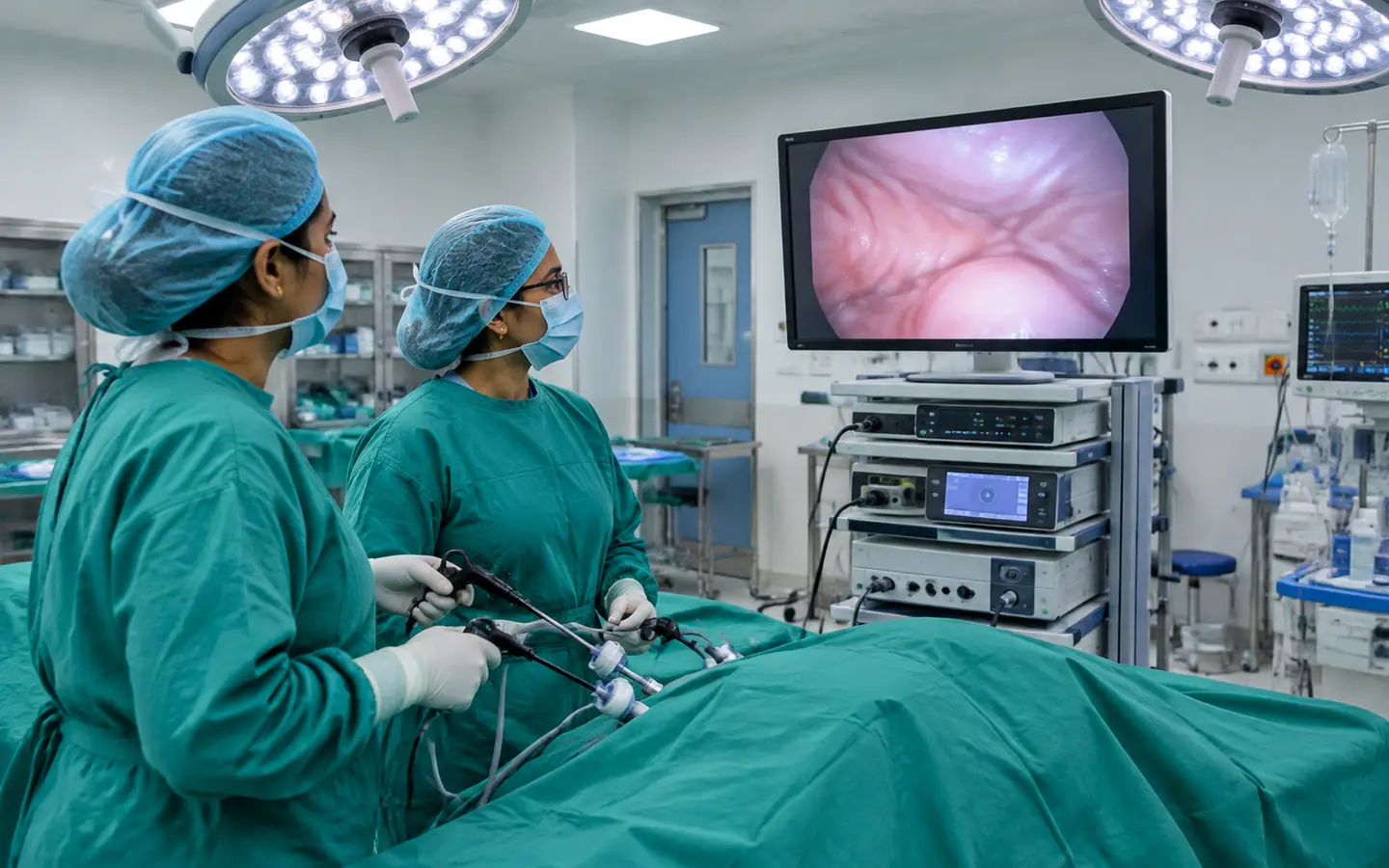
Advanced Laparoscopic Surgery: Laparoscopic Hysterectomy in HSR Layout
Medically reviewed by Dr. Achi Ashok, MBBS, MD (OBG) [AIIMS] | Last reviewed:
Keyhole surgery for the uterus, fibroids and ovarian cysts, with smaller cuts and a shorter stay.
Emergency: 24 × 7
Greenview Medical Center offers laparoscopic hysterectomy in HSR Layout. We also offer keyhole surgery for fibroids, ovarian cysts and ectopic pregnancy. Laparoscopy uses a camera and fine instruments passed through small cuts in the abdomen. Most women have less pain and a shorter hospital stay than after open surgery. Our gynaecology team explains every option, including ways to keep the uterus. Call 080 6792 7777 to book.
What is advanced laparoscopic gynaecological surgery?
Advanced laparoscopic gynaecological surgery treats the uterus, ovaries and tubes through small cuts instead of one large opening. The surgeon watches a magnified view of the pelvis on a screen. Long, thin instruments do the work. It is used for hysterectomy, fibroid removal, cyst removal and finding the cause of pelvic pain.
How keyhole surgery works
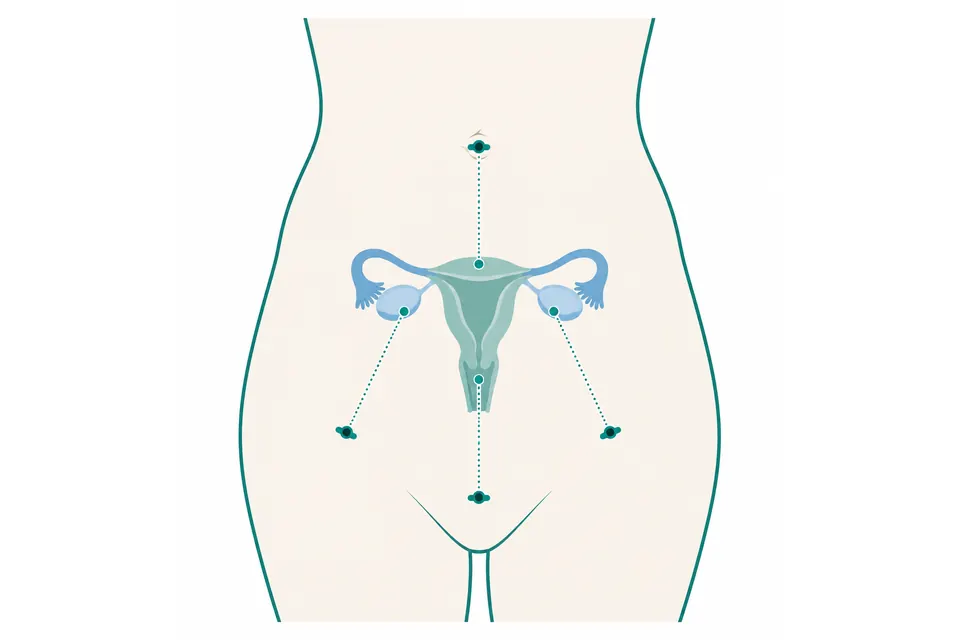
Keyhole surgery for the uterus follows the same basic steps. You have a general anaesthetic, so you are asleep throughout. A small cut is made in or near the navel. The abdomen is gently filled with carbon dioxide gas to create space. A camera called a laparoscope is passed in. Two or three more cuts of 5 to 10 millimetres hold the instruments. At the end, the gas is let out and the cuts are closed with small stitches or skin glue.
Procedures we perform by laparoscopy
Our gynaecology team performs a range of keyhole operations at Greenview. These include laparoscopic hysterectomy, laparoscopic myomectomy for fibroids, ovarian cyst removal, surgery for ectopic pregnancy and diagnostic laparoscopy. The choice depends on your condition and scan findings. It also depends on whether you wish to keep your uterus or plan a pregnancy.
Laparoscopic hysterectomy
A hysterectomy removes the uterus. It may be advised for heavy bleeding, fibroids, adenomyosis or early changes that could turn into cancer. Removing the uterus ends periods and the chance of pregnancy.
Total laparoscopic hysterectomy (TLH)
In a total laparoscopic hysterectomy, the uterus and cervix are freed entirely through the keyhole cuts. They are then removed through the vagina. This is the most common keyhole method.
Laparoscopy assisted vaginal hysterectomy (LAVH)
In LAVH, the upper part of the operation is done by keyhole. The rest is completed through the vagina. It may suit women with a smaller uterus or some descent of the uterus.
Are the ovaries removed?
Not always. Healthy ovaries are often kept in younger women, so menopause does not start early. The fallopian tubes are usually removed, as this may lower the risk of ovarian cancer. Your surgeon discusses this with you before surgery.
Laparoscopic myomectomy for fibroids
Myomectomy removes fibroids while keeping the uterus. It suits women who want to keep their fertility or their uterus. The fibroids are taken out through the small cuts, and the wall of the uterus is repaired with stitches. Greenview offers fibroid removal surgery in HSR Layout by keyhole and hysteroscopic methods. Fibroids inside the cavity may be removed by hysteroscopy instead.
Ovarian cyst removal
Most ovarian cysts are harmless and go away by themselves. Surgery is advised for large, painful or lasting cysts, or when a scan raises concern. Ovarian cyst removal by laparoscopy takes out the cyst and keeps healthy ovarian tissue. Cysts caused by endometriosis are covered on our endometriosis treatment page.
Surgery for ectopic pregnancy
An ectopic pregnancy grows outside the uterus, usually in a fallopian tube. It cannot continue safely and may cause internal bleeding. Keyhole surgery removes the pregnancy, and sometimes the affected tube. Pain or bleeding in early pregnancy needs urgent care in our 24x7 emergency.
Diagnostic laparoscopy for pelvic pain
When scans do not explain long term pelvic pain, a diagnostic laparoscopy lets the surgeon look directly. Endometriosis, scar tissue or cysts can often be treated during the same procedure.
Laparoscopic vs open surgery
Both methods treat the same conditions, but recovery differs. Laparoscopic surgery uses small cuts, so most women have less pain and go home sooner. Open surgery uses one larger cut and needs a longer recovery. The table below compares typical experiences. Your own recovery depends on your health and the operation you have.
| Feature | Laparoscopic surgery | Open surgery |
|---|---|---|
| Cuts | 3 to 4 cuts of 5 to 10 millimetres | One cut of about 10 to 15 centimetres across the lower abdomen |
| Pain | Usually milder, often controlled with tablets | More pain in the first days, often needing stronger pain relief |
| Hospital stay | Usually 1 to 2 days | Usually 3 to 5 days |
| Return to daily activity | Light activity within days, desk work in 2 to 3 weeks | Usually 4 to 6 weeks |
| Scar | Small marks that fade over months | One longer scar, usually along the bikini line |
Who is suitable for laparoscopic hysterectomy in HSR Layout?
Most women who need a hysterectomy for a non cancerous condition can have it by keyhole. Suitability depends on the size of the uterus, previous surgery, weight and general health. Your gynaecologist examines you and reviews your scan before advising. Other options are always discussed before a hysterectomy is planned.
When open surgery may be safer
Open surgery may be advised for a very large uterus or fibroid. Dense scar tissue from earlier operations, or some cancers, may also need it. Occasionally a keyhole operation is changed to open surgery during the procedure. This is done only for your safety, and your surgeon explains the possibility beforehand.
Alternatives to hysterectomy
Hysterectomy is a major decision, and it is not the only option. Heavy bleeding often settles with medicines or a hormone releasing coil. Fibroids can be removed by myomectomy or hysteroscopy. Endometrial ablation thins the lining in women who have completed their family. Your gynaecologist explains each choice and its limits.
If you are trying to conceive, our fertility and IVF team can help plan treatment around pregnancy.
Preparing for laparoscopic surgery
Before surgery you meet the surgeon and the anaesthetist, sign a consent form and complete routine tests. These usually include a blood count, blood group, sugar and kidney tests and a urine test. An ECG is done if needed. You usually stop eating six hours before surgery. Tell us about every medicine you take.
Arrange for someone to take you home and help for the first few days. Bring your reports, medicines and insurance papers on the day. Surgery takes place in our operation theatres, with the ICU and blood bank on the same campus.
Recovery after laparoscopic hysterectomy
Most women walk the same evening and go home within one to two days. Mild pain, tiredness and some light vaginal bleeding are expected. Full internal healing takes about six weeks, even though the outer cuts heal sooner. Follow your surgeon's advice and return for your review visit.
The first week
Take painkillers as prescribed and walk a little several times a day. Shoulder tip pain from the gas is common and settles in a day or two. Keep the small wounds clean and dry. Light bleeding or brown discharge can last up to two weeks.
Weeks two to six
Energy returns gradually. Increase walking and light household tasks as you feel able. Most women with desk jobs return to work in two to three weeks. Avoid heavy housework and exercise classes until your review.
Lifting, driving, work and intimacy
Avoid lifting anything heavier than a full kettle for about four weeks. You can usually drive after two weeks, once you can brake firmly without pain. Wait about six weeks before intercourse so the top of the vagina can heal. Ask your surgeon before returning to a physical job.
Risks and how we reduce them
Laparoscopic hysterectomy is a common operation and is generally safe, but every surgery carries some risk. Possible problems include bleeding, infection, blood clots and, rarely, injury to the bladder, bowel or ureters. Our team checks your fitness, uses blood clot prevention and monitors you closely after surgery to lower these risks.
Call us or come to our emergency department if you have fever, heavy bleeding or worsening pain. Also call for swelling in one leg or trouble passing urine.
Your laparoscopic gynaecology surgeon
Laparoscopic gynaecology surgery at Greenview is led by Dr. Achi Ashok. She holds an MD in obstetrics and gynaecology from AIIMS and a diploma in reproductive medicine from Germany. Her practice includes laparoscopic and hysteroscopic surgery. She explains each option clearly and plans surgery around your health and family plans.
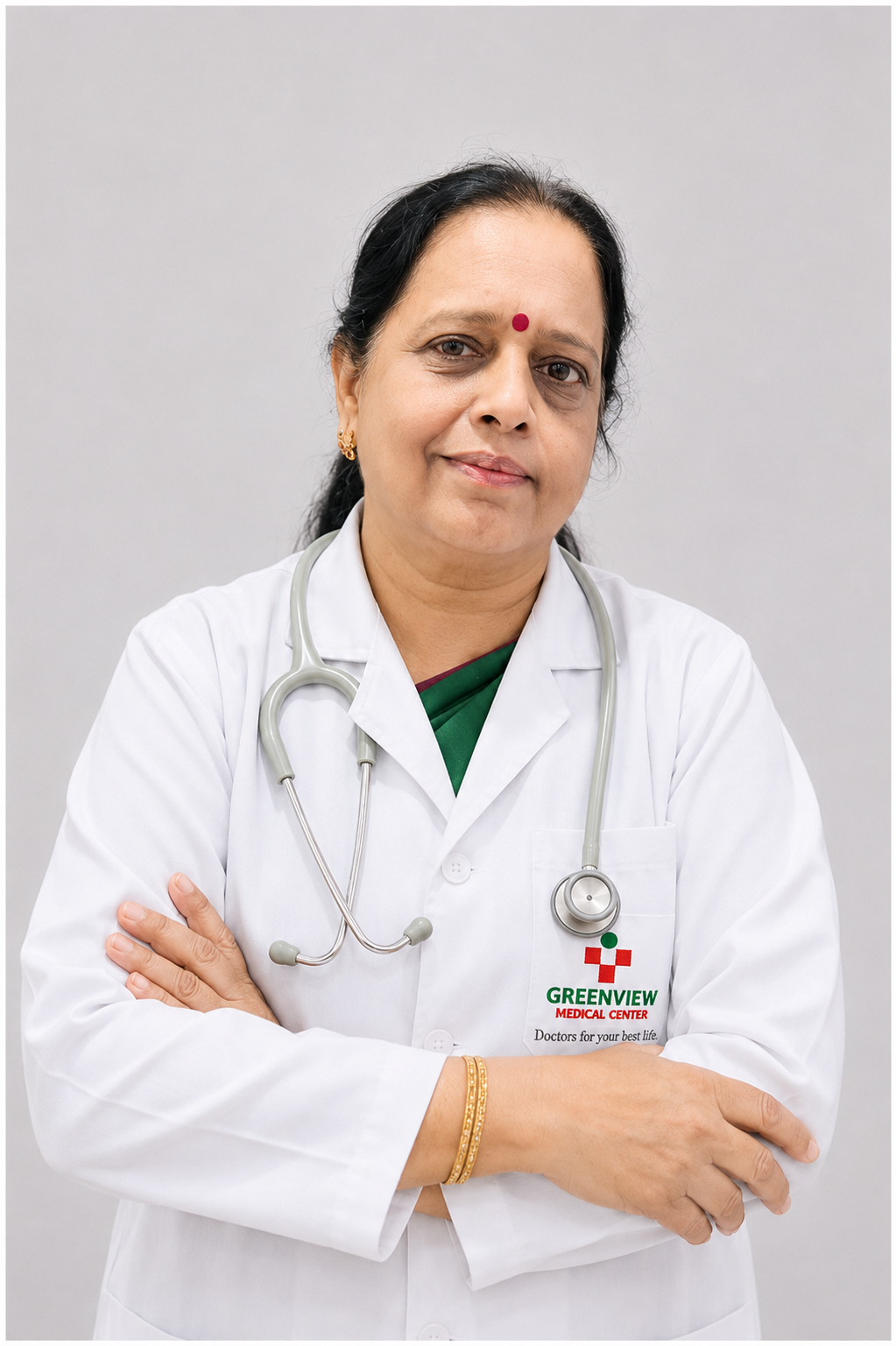
Dr. Achi Ashok
Obstetrics, Gynaecology & Infertility · KMC 39148
MBBS, MD (OBG) [AIIMS], Dip. in Reproductive Medicine (Germany)
Consultation: Monday to Saturday · 12:00 PM to 2:00 PM and 7:30 PM to 9:30 PM. Please call to confirm a time.
View Dr. Achi Ashok's profileIf you are looking for a laparoscopic gynecologist near HSR Layout, you can book with her directly. Meet the wider gynecologist surgeon in HSR Layout team.
Cost and cashless insurance for laparoscopic hysterectomy
The cost of laparoscopic hysterectomy depends on the type of surgery, anaesthesia, tests and length of stay. We give you a written estimate before admission. Medically needed hysterectomy is usually covered by health insurance. Greenview offers cashless treatment with 43 insurers and TPAs. See cashless insurance.
Frequently Asked Questions
These are the questions women ask most often before laparoscopic hysterectomy and keyhole fibroid or cyst surgery. The answers give general guidance only. Your own recovery and options depend on your health, your scan findings and the operation planned. Your surgeon will answer any further questions at your consultation.
How long is recovery after laparoscopic hysterectomy?
Most women feel much better within two weeks and return to desk work in two to three weeks. Full internal healing takes about six weeks. Avoid heavy lifting and intercourse during this time. Recovery may be slower after a large uterus or when other procedures are done at the same time.
How many days in hospital after laparoscopic hysterectomy?
Most women stay one to two days after laparoscopic hysterectomy. You can usually go home once you are eating, walking and passing urine. Your pain should also be controlled with tablets. A longer stay may be needed after complex surgery or if you have other health conditions.
Will I go into menopause after a hysterectomy?
Not if your ovaries are kept. The ovaries make hormones, so keeping them avoids sudden menopause. Your periods will stop because the uterus is removed. If the ovaries are removed before natural menopause, menopause starts straight away. Your surgeon discusses hormone support with you in that case.
Can fibroids be removed without removing the uterus?
Yes. A myomectomy removes fibroids and keeps the uterus. It can be done by keyhole, or by hysteroscopy for fibroids inside the cavity. Very large fibroids may need open surgery. New fibroids can grow later. Your surgeon advises which method suits the size and position of your fibroids.
Is laparoscopic hysterectomy better than open surgery?
For most women, laparoscopic hysterectomy means less pain, a shorter stay and a faster return to normal life. Open surgery is still the safer choice in some cases, such as a very large uterus or some cancers. Your surgeon recommends the safest approach for you after examining you.
Can I get pregnant after myomectomy?
Many women conceive after myomectomy. Your surgeon usually advises waiting three to six months so the uterus heals well. A caesarean birth may be recommended if the wall of the uterus was deeply repaired. Our fertility team can help if you have trouble conceiving after surgery.
Will I have scars?
Laparoscopic surgery leaves three or four small marks, each about 5 to 10 millimetres long. One is usually hidden in the navel. They fade over several months. Open surgery leaves one longer scar, usually low along the bikini line. Scars vary between people and change with time.
Is laparoscopic hysterectomy covered by insurance?
Most health insurance policies cover medically needed laparoscopic hysterectomy. Some policies have a waiting period for this operation. Greenview offers cashless treatment with 43 insurers and TPAs. Our insurance desk checks your policy, explains what is covered and arranges pre authorisation before your admission.
Book a gynaecology surgery consultation
Book a consultation for laparoscopic hysterectomy in HSR Layout at Greenview Medical Center. We are opposite Agara Lake in Sector 5, HSR Layout, Bengaluru 560102. We are close to Koramangala, BTM Layout, Bellandur and Sarjapur Road. Call 080 6792 7777, WhatsApp +91 96861 15772, or book online.
Sources
This page uses patient guidance from the NHS and the American College of Obstetricians and Gynecologists. These sources explain hysterectomy, fibroids and recovery in more detail. This page is for general information and does not replace a consultation with a doctor. Your surgeon will advise on what applies to you.
- NHS: Hysterectomy
- NHS: Fibroids
- ACOG: Hysterectomy FAQ