

Prostate Cancer: Prostate Cancer Treatment in HSR Layout
Medically reviewed by Dr. Narasimhaiah, MBBS, MS, MCh | Published and last reviewed:
Calm, clear guidance from a raised PSA to diagnosis, treatment and follow up.
Emergency: 24 × 7
A raised PSA or a prostate cancer diagnosis brings many questions. Greenview Medical Center offers prostate cancer treatment in HSR Layout, from PSA testing, MRI and biopsy to active surveillance, prostate cancer surgery and coordinated radiotherapy and hormone treatment with our oncology team. Many prostate cancers grow slowly and, when found early, can be treated successfully or simply monitored. Our urologists explain every option clearly so you and your family can decide together. Call 080 6792 7777 for a confidential consultation.
What is prostate cancer?
The prostate is a walnut sized gland below the bladder that surrounds the urethra and helps make semen. Prostate cancer develops when cells in the gland grow out of control. Many prostate cancers grow very slowly and may never cause harm, while some grow faster and need treatment. Finding out which type you have is the key first step.
Prostate cancer or enlarged prostate?
Both are common in older men and can coexist, but they are different conditions.
| Feature | Enlarged prostate (BPH) | Prostate cancer |
|---|---|---|
| What it is | Non cancerous growth of the gland | Cancer cells within the gland |
| Common symptoms | Weak stream, frequent and night time urination | Often none in early stages |
| PSA | May be mildly raised | May be raised |
| Spreads to other organs | No | Can, if untreated |
| Main treatments | Medicines, TURP | Monitoring, surgery, radiotherapy, hormone therapy |
For urinary symptoms from an enlarged prostate, see our urologist in HSR Layout page on enlarged prostate treatment.
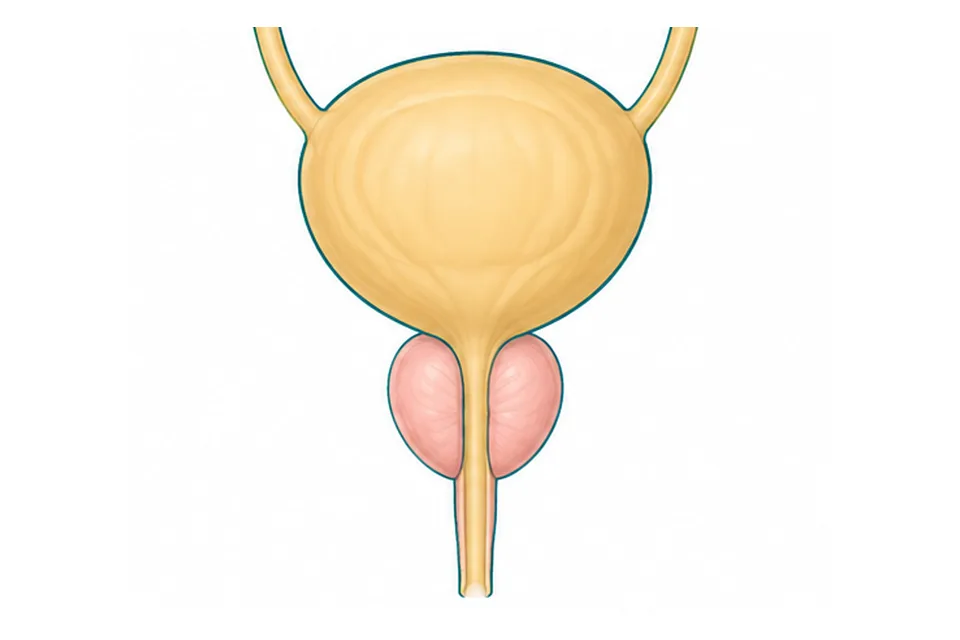
Symptoms of prostate cancer
Why early prostate cancer often has no symptoms
Early prostate cancer usually causes no symptoms because it grows in the outer part of the gland, away from the urethra. This is why PSA testing and examination matter. When symptoms do appear, they may include:
- Difficulty starting or a weak urine stream
- Needing to pass urine more often, especially at night
- Blood in urine or semen
- New erection problems
- Bone pain, back pain or weight loss in advanced cancer
Most of these symptoms are more often caused by an enlarged prostate, but they should still be checked.
Who is at higher risk?
- Men over 50, with risk rising with age
- Men with a father or brother who had prostate cancer
- Men with a family history of breast or ovarian cancer, or known BRCA gene changes
- Men who are overweight
If you are over 50, or over 45 with a family history, talk to a urologist about whether PSA testing is right for you.
The PSA test
What PSA measures
Prostate specific antigen (PSA) is a protein made by the prostate. A simple blood test measures its level. A raised PSA can be a sign of prostate cancer, but it is also raised by many non cancerous conditions.
High PSA: what happens next
A single high result does not mean you have cancer. Your urologist considers your age, prostate size, symptoms and PSA trend before deciding on further tests.
Why the test may be repeated
PSA can vary from day to day. A repeat test after a few weeks, sometimes after treating an infection, confirms whether the level is truly raised.
Other causes of a raised PSA
An enlarged prostate, a urine or prostate infection, recent ejaculation, vigorous cycling, a recent urinary catheter or procedure can all raise PSA. Avoid ejaculation and cycling for 48 hours before a test.
How prostate cancer is diagnosed
Digital rectal examination
The urologist gently feels the prostate through the back passage with a gloved finger. It takes less than a minute and can detect hard or irregular areas.
MRI of the prostate
A multiparametric MRI scan is now usually done before a biopsy. It shows suspicious areas and helps decide whether a biopsy is needed and where to target it. A normal MRI may mean some men can avoid a biopsy.
Prostate biopsy
Small samples of prostate tissue are taken with a fine needle and examined by our pathology team.
Transperineal and transrectal biopsy
A transperineal biopsy passes the needle through the skin between the scrotum and anus, which carries a lower risk of infection. A transrectal biopsy passes through the back passage. Both are done under anaesthesia or local numbing, and your urologist will explain which is planned.
Grading and staging
The biopsy result gives a Gleason score or grade group from 1 to 5, showing how aggressive the cancer looks. Scans such as MRI, a bone scan or a PSMA PET scan show whether it has spread. Together these place your cancer in a low, intermediate or high risk group, which guides treatment.
Prostate cancer treatment options in HSR Layout
Treatment depends on the risk group, your age, general health, and what matters most to you. Every option has benefits and side effects, and there is often more than one reasonable choice.
Active surveillance
For low risk cancer, regular PSA tests, MRI scans and sometimes repeat biopsies are used to monitor it closely. Treatment starts only if the cancer shows signs of growing. This avoids or delays side effects for many men.
Watchful waiting
For older men or those with other serious health conditions, symptoms are managed as they arise rather than treating the cancer itself.
Radical prostatectomy
Surgery removes the whole prostate and nearby seminal vesicles, and sometimes nearby lymph nodes. It is an option for cancer that has not spread outside the prostate.
What happens during surgery
Radical prostatectomy is done under general anaesthesia by open, laparoscopic or robotic surgery. A urinary catheter stays for one to two weeks while the join between the bladder and urethra heals. Hospital stay is usually two to four days.
Recovery, continence and erections
Some urine leakage is common after the catheter is removed and improves over weeks to months for most men, helped by pelvic floor exercises. Erection problems are common after surgery; nerve sparing techniques, medicines and time help many men. Your urologist will discuss what to expect for you.
Radiotherapy
High energy rays target the prostate from outside the body over several weeks, or radioactive seeds are placed inside the prostate. Radiotherapy is an alternative to surgery for many men and is often combined with hormone therapy. We arrange radiotherapy through our partner centres and coordinate care with our oncologist in HSR Layout.
Hormone therapy
Prostate cancer often needs the hormone testosterone to grow. Medicines or injections that lower testosterone can shrink or control the cancer, alone or with radiotherapy.
Treatment for advanced prostate cancer
If cancer has spread, hormone therapy, newer hormone medicines, chemotherapy and bone protecting treatments can control it, often for many years. Pain relief and supportive care keep quality of life a priority.
Choosing the right treatment for you
We encourage you to bring your partner or a family member, ask questions and take time to decide when it is safe to do so. Complex cases are discussed with oncology, radiology and pathology colleagues. A second opinion is always welcome.
Life after prostate cancer treatment
Regular PSA tests after treatment check that the cancer is controlled. Pelvic floor exercises, a healthy weight, regular activity and stopping smoking support recovery. Our counselling team can help with the emotional side of diagnosis and treatment.
Your prostate cancer team at Greenview
Dr. Narasimhaiah, MBBS, MS, MCh, and Dr. V H Ashwath Venkataramana, MBBS, MS (General Surgery), MRCS (Edinburgh), MCh (Urology), assess and treat prostate conditions, including prostate cancer. Our urologists work alongside the Greenview oncology team. Meet our urologist in HSR Layout team.

Dr. Narasimhaiah
Urologist · KMC 39419
MBBS, MS, MCh
Consultation: 10:30 AM. Please call to confirm a time.
View Dr. Narasimhaiah's profile
Dr. V H Ashwath Venkataramana
Urologist · KMC 119804
MBBS, MS (General Surgery), MRCS (Edinburgh), MCh (Urology)
Consultation: 4:30 PM. Please call to confirm a time.
View Dr. V H Ashwath Venkataramana's profileCost and cashless insurance
The cost depends on tests, the treatment chosen and length of stay. We share a written estimate before admission. Prostate cancer diagnosis and treatment are usually covered by health insurance, and Greenview offers cashless treatment with 43 insurers and TPAs. See cashless insurance.
Frequently Asked Questions
What are the early signs of prostate cancer?
Early prostate cancer usually has no symptoms. When present, signs include a weak stream, frequent night time urination or blood in urine or semen, which are more often due to an enlarged prostate.
What is a normal PSA level?
There is no single normal level. It depends on age and prostate size. Your urologist interprets your result with your age, symptoms and PSA trend.
Does a high PSA mean cancer?
No. An enlarged prostate, infection and recent ejaculation can all raise PSA. Further tests such as MRI decide whether a biopsy is needed.
At what age should men get a PSA test?
Men over 50, or over 45 with a family history, can discuss PSA testing with a urologist to weigh its benefits and limits.
Is prostate biopsy painful?
It is done under local or general anaesthesia, so discomfort is usually mild. Some soreness and blood in urine or semen for a few days is common.
What is active surveillance?
Close monitoring of low risk prostate cancer with regular PSA tests and MRI, with treatment only if the cancer grows.
Will I have urine leakage after prostate surgery?
Some leakage is common at first and improves over weeks to months for most men, especially with pelvic floor exercises.
Can I have erections after prostate cancer treatment?
Many men regain some erectile function over time, depending on age, nerve sparing and treatment type. Medicines and other aids can help.
Is prostate cancer curable if found early?
Cancer confined to the prostate can often be treated successfully, and some low risk cancers never need active treatment.
Is prostate cancer treatment covered by insurance?
Most health insurance policies cover prostate cancer treatment. Our insurance desk checks your policy and arranges cashless approval.
Book a confidential prostate consultation
Greenview Medical Center, Opposite Agara Lake, Sector 5, HSR Layout, Bengaluru 560102. Call 080 6792 7777 or WhatsApp +91 96861 15772 for prostate cancer treatment in HSR Layout.
Email: appt@gvhcol.com
Sources
- NHS: Prostate cancer
- NICE guideline NG131: Prostate cancer: diagnosis and management
- Urology Care Foundation: Urology health information
This page is for general information and does not replace a consultation with a doctor.