

Pelvic Floor Reconstruction: Uterine Prolapse Treatment in HSR Layout
Medically reviewed by Dr. Achi Ashok, MBBS, MD (OBG) [AIIMS] | Last reviewed:
Exercises, pessaries and pelvic floor repair for prolapse and urine leakage, discussed privately.
Emergency: 24 × 7
A heavy, dragging feeling, a bulge in the vagina, or leaking urine when you cough or laugh are common after childbirth and menopause, and they are treatable. Greenview Medical Center offers uterine prolapse treatment in HSR Layout, from pelvic floor exercises and support pessaries to pelvic floor reconstruction surgery. Our gynaecologists explain every option privately and help you choose what fits your life. Call 080 6792 7777 to book.
What is the pelvic floor?
The pelvic floor is a layer of muscles and ligaments that stretches like a hammock across the base of the pelvis. It supports the bladder, uterus and bowel and helps control urine and stools. When it is weakened or stretched, these organs can drop down into the vagina, which is called pelvic organ prolapse, and bladder control can be affected.
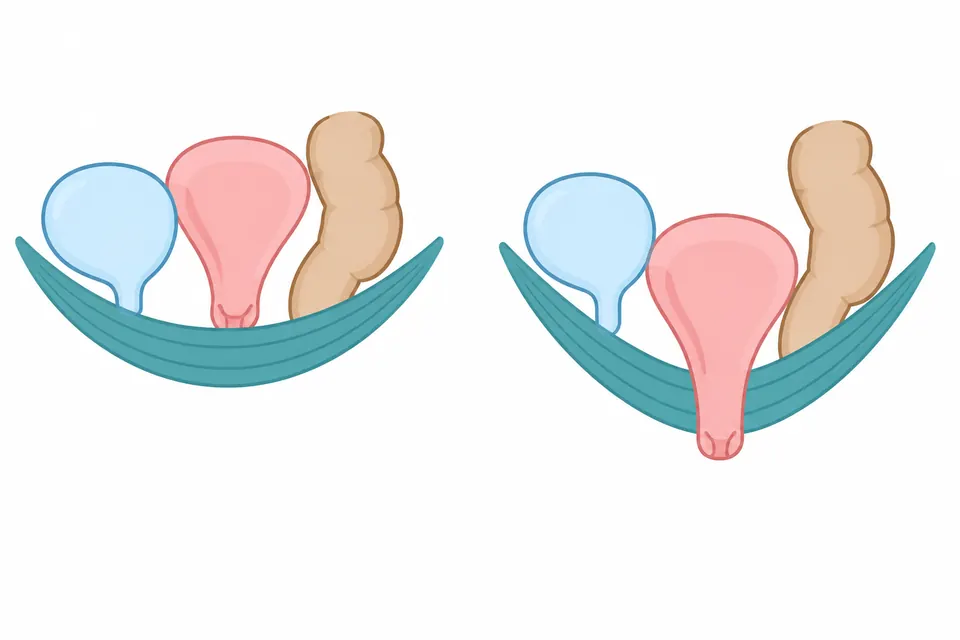
Types of pelvic organ prolapse
Prolapse is named by the organ that has dropped. More than one type can occur together.
| Type | Organ that drops | Common symptoms |
|---|---|---|
| Uterine prolapse | Uterus and cervix | Dragging feeling, bulge at the vaginal opening |
| Bladder prolapse (cystocele) | Bladder into the front wall of the vagina | Slow urine flow, frequent urine infections, feeling of incomplete emptying |
| Bowel prolapse (rectocele) | Rectum into the back wall of the vagina | Difficulty emptying the bowel, needing to press to pass stools |
| Vault prolapse | Top of the vagina after hysterectomy | Bulge or heaviness |
Uterine prolapse
The uterus slips down into the vagina. In mild cases it is felt only on straining; in severe cases the cervix or uterus can come outside the vaginal opening.
Bladder prolapse (cystocele)
The front wall of the vagina weakens and the bladder bulges into it. This is the most common type.
Bowel prolapse (rectocele)
The back wall of the vagina weakens and the rectum bulges into it, making it harder to empty the bowel.
Vault prolapse after hysterectomy
The top of the vagina can drop after a previous hysterectomy, especially if support ligaments are weak.
Symptoms of prolapse and pelvic floor weakness
A bulge or heaviness
A feeling of something coming down, a visible or palpable bulge, or a dragging ache in the lower back or vagina, often worse at the end of the day or after standing.
Urine leakage
Stress urinary incontinence is leakage when you cough, sneeze, laugh, lift or exercise. Urge incontinence is a sudden strong need to pass urine. Both are common and treatable.
Bowel and intimacy concerns
Some women have difficulty emptying the bowel, or discomfort and reduced sensation during intercourse. These are medical symptoms, and you can discuss them openly with your doctor.
Causes and risk factors
- Pregnancy and vaginal childbirth, especially large babies or long labours
- Menopause, as falling oestrogen weakens tissues
- Ageing
- Long term heavy lifting
- Chronic cough or constipation with straining
- Being overweight
- Previous pelvic surgery
- Family history of prolapse
How prolapse is assessed
Examination and grading
Your gynaecologist examines you lying down and sometimes standing, and asks you to cough or strain to see how far each part has dropped. Prolapse is graded by how far it descends, which helps guide treatment.
Bladder function tests
If you have urine leakage, you may be asked to keep a bladder diary, have a urine test and an ultrasound to check emptying. Some women need specialised bladder pressure tests, arranged with our urology team.
Uterine prolapse treatment options in HSR Layout
Treatment depends on how much the prolapse bothers you, its grade, your age, your general health and whether you want more children. Not every prolapse needs surgery.
Treatment without surgery
Pelvic floor muscle training
Supervised pelvic floor exercises (often called Kegel exercises) for at least three months can improve mild to moderate prolapse and stress leakage. A trained physiotherapist ensures you are using the right muscles. Learn about pelvic floor physiotherapy.
Vaginal pessary
A pessary is a soft silicone ring or support placed in the vagina to hold the organs in place. It is fitted in the clinic, changed or cleaned every few months, and suits women who prefer to avoid or delay surgery.
Lifestyle changes
Maintaining a healthy weight, treating constipation and chronic cough, avoiding heavy lifting, and local oestrogen cream after menopause all reduce strain on the pelvic floor.
Pelvic floor reconstruction surgery
Surgery is considered when symptoms are troublesome and non surgical treatment has not helped or is not wanted.
Vaginal repair of the front and back walls
The weakened vaginal walls are strengthened with stitches through the vagina, with no abdominal cut. This treats bladder and bowel prolapse.
Vaginal hysterectomy with repair
For uterine prolapse in women who have completed their family, the uterus is removed through the vagina and the top of the vagina is attached to strong ligaments.
Uterus preserving repair
For women who wish to keep their uterus, it can be lifted and stitched to strong ligaments, by vaginal or laparoscopic surgery.
Surgery for stress urinary incontinence
If leakage continues after pelvic floor training, procedures to support the urethra may be offered. Your surgeon will explain the options and their benefits and risks.
A note on mesh
Synthetic vaginal mesh for prolapse repair is now restricted in many countries because of possible long term complications. Most repairs use your own tissues. Your surgeon will discuss materials openly before any operation.
Recovery after pelvic floor surgery
Most women stay in hospital one to three days. A urinary catheter may be needed for a short time. Avoid heavy lifting, straining and intercourse for about six weeks. Most return to desk work in four to six weeks. Continuing pelvic floor exercises after recovery helps protect the repair.
Protecting your pelvic floor
- Do pelvic floor exercises daily, especially after childbirth
- Avoid constipation with fibre, fluids and regular habits
- Keep a healthy weight
- Lift with your legs and avoid heavy lifting
- Treat chronic cough
- Seek help early for leakage or heaviness
Your pelvic floor specialist

Dr. Achi Ashok
Obstetrics, Gynaecology & Infertility · KMC 39148
MBBS, MD (OBG) [AIIMS], Dip. in Reproductive Medicine (Germany)
Consultation: Monday to Saturday · 12:00 PM to 2:00 PM and 7:30 PM to 9:30 PM. Please call to confirm a time.
View Dr. Achi Ashok's profileMeet our gynecologist surgeon in HSR Layout team.
Cost and cashless insurance
The cost depends on the treatment, type of surgery and length of stay. We share a written estimate before admission. Medically needed prolapse and incontinence surgery is usually covered by health insurance, and Greenview offers cashless treatment with 43 insurers and TPAs. See cashless insurance.
Frequently Asked Questions
What are the first signs of uterine prolapse?
A heavy or dragging feeling in the vagina, a bulge you can feel, lower back ache and symptoms that worsen by evening are common early signs.
Can prolapse be treated without surgery?
Yes. Pelvic floor exercises, a pessary and lifestyle changes help many women, especially with mild to moderate prolapse.
Why do I leak urine when I cough or sneeze?
This is stress urinary incontinence, caused by weak pelvic floor support. Pelvic floor training helps many women, and surgery is an option if it does not.
What is a pessary?
A soft silicone device placed in the vagina to support the pelvic organs. It is fitted in the clinic and reviewed every few months.
Can prolapse come back after surgery?
It can, as the underlying tissues may remain weak. Avoiding heavy lifting, treating constipation and continuing exercises lower the risk.
Can I have surgery if I still want children?
Usually surgery is delayed until your family is complete, as pregnancy can affect the repair. Pessaries and exercises help in the meantime, and uterus preserving options exist.
How long is recovery after prolapse surgery?
Most women return to desk work in four to six weeks and avoid heavy lifting for about six weeks.
Is prolapse surgery covered by insurance?
Most policies cover medically needed prolapse surgery. Our insurance desk checks your policy and arranges cashless approval.
Book a pelvic floor consultation
Greenview Medical Center, Opposite Agara Lake, Sector 5, HSR Layout, Bengaluru 560102. Call 080 6792 7777 or WhatsApp +91 96861 15772 for uterine prolapse treatment in HSR Layout.
Sources
- NICE guideline NG123: Urinary incontinence and pelvic organ prolapse in women
- NHS: Pelvic organ prolapse
- NHS: Urinary incontinence
This page is for general information and does not replace a consultation with a doctor.