
Fractures and Dislocations: Fracture Treatment in HSR Layout
Protect the injury, get assessed, and understand your next steps.
Emergency: 24 × 7
A fall or collision can leave you unsure whether moving is safe. For fracture treatment in HSR Layout, Greenview provides emergency assessment, digital X-ray and orthopaedic care.
Looking for a fracture hospital near you? Focus first on safe transport. We are opposite Agara Lake, Sector 5, Koramangala, Bengaluru, with access from Bellandur.
First aid after a suspected fracture or dislocation
Keep still and support the injured limb in its current position using cushions or folded clothing. Do not straighten it or push a joint back. Cover open wounds with a clean dressing. Avoid unnecessary movement while someone calls for help and checks your breathing.
- Apply ice wrapped in cloth briefly, without pressing on exposed bone.
- Have nothing to eat or drink if surgery may be needed, unless emergency staff advise otherwise.
- For neck, back or hip injuries, call 080 6792 7777 or an ambulance. Avoid moving the person.
- Heavy bleeding also needs emergency help. Apply firm pressure around, not onto, protruding bone.
Fracture, dislocation or sprain: how to tell
A fracture is a broken bone, while a dislocation means joint surfaces have moved apart. A sprain injures the ligaments holding a joint together. Pain and swelling overlap across all three injuries. Appearance alone cannot reliably guide you, so avoid testing movement or walking repeatedly.
Only an X-ray confirms the suspected break in many injuries; some hidden fractures need further imaging. A normal first X-ray does not always rule out a fracture.
| What you notice | Fracture | Dislocation | Sprain |
|---|---|---|---|
| Pain | Often over bone | Often centred at joint | Often around ligaments |
| Swelling | Common | Common | Common |
| Shape | May look bent | Joint may look misplaced | Usually unchanged |
| Movement | Painful or limited | Often very restricted | May remain possible |
| Weight bearing | May be impossible | Often difficult | Can also be difficult |
| Bruising | May appear later | May develop | Can be extensive |
Types of fractures
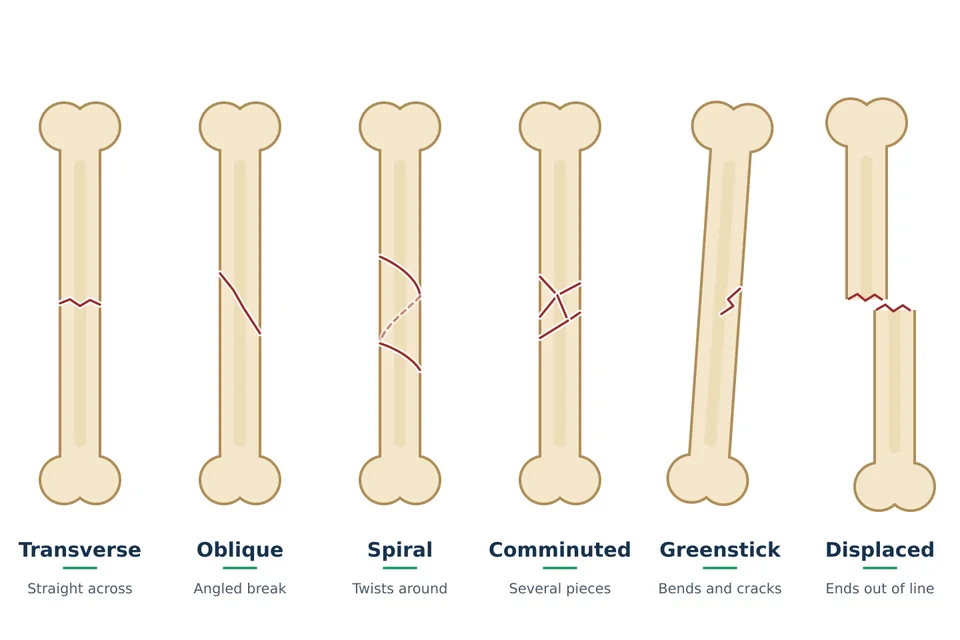
The type of break affects protection, treatment and follow-up. Doctors check whether the skin is broken and whether bone ends remain aligned. They also consider the joint surface, nearby nerves and blood supply. A small crack can still need careful treatment, especially near a joint.
Closed and open fractures
Closed fractures leave the skin intact. Open fractures have a wound communicating with the break and need urgent antibiotics and surgical assessment.
Displaced and non displaced fractures
Displaced fragments have shifted; non displaced fragments remain aligned. Repeat imaging may check that alignment stays acceptable during healing.
Stress fractures
Repeated loading can cause small cracks, often after sudden training changes. Early X-rays may miss them, so persistent focal pain needs review.
Fragility fractures from weak bones
A minor fall can break weakened bone. Assessment may include osteoporosis testing and discussion of medicines that reduce future fracture risk.
Common dislocations
A dislocated joint needs prompt medical assessment because nerves, vessels and surrounding tissues may be injured. Do not let anyone pull it into place outside medical care. The clinician checks circulation and sensation before and after reduction. Reduction means gently restoring the joint's usual position.
Shoulder dislocation
Shoulder dislocation treatment usually involves pain relief and reduction by a trained clinician. Later rehabilitation restores strength and addresses the risk of repeat episodes.
Kneecap dislocation
A kneecap may slip sideways and sometimes return itself. It still needs assessment for cartilage injury and a rehabilitation plan.
Elbow and finger dislocation
Remove rings early if this is easy, before swelling increases. Never force a stuck ring or pull a crooked finger straight.
Common fractures we treat
Treatment depends on the bone involved, its position and your daily needs. The same injury may need different care in a child and an older adult. Bring previous scans and your medicine list if available. Tell the team about blood thinners, allergies and any existing mobility difficulties.
Wrist and forearm fractures
Wrist fracture treatment may use a splint, cast, reduction or fixation. Finger numbness or increasing tightness needs urgent reassessment.
Ankle fractures
Ankle stability helps determine whether a cast or surgery is needed. Avoid weight bearing until the treating team explains what is safe.
Hip fractures in older adults
A hip fracture in elderly people is an emergency, even without obvious deformity. NICE CG124 advises surgery on the day of or after admission.
This is guidance, not a promised Greenview timetable; medical stabilisation may affect planning. Early mobilisation follows when safe, supported by orthopaedic surgeons, ICU and physiotherapy.
For ongoing symptoms outside an acute injury, read about hip pain treatment. After a fall, inability to stand needs emergency assessment.
Collarbone and shoulder fractures
Some injuries heal with a sling and guided exercises. Displacement, skin pressure or joint involvement may change the treatment plan.
Fractures in children
Children's growth plates need careful assessment because injury can affect future bone growth. Orthopaedic care may involve paediatrics, with follow-up tailored to age and fracture location.
What happens when you arrive at Greenview
Emergency open 24x7 means you can seek assessment without waiting for a routine appointment. For road accident fracture care, staff first check breathing, bleeding and other injuries. Tell them how the accident happened. Pain control and limb protection begin while the team plans investigations and treatment.
Emergency assessment
Our emergency and trauma service checks circulation, sensation and skin wounds. For 24x7 orthopedic emergency care in Bangalore, call an ambulance rather than risk unsafe transport.
Digital X-ray and scans
During digital X-ray, staff help position the injured area without unnecessary movement. CT or MRI is arranged when needed; the doctor explains where it is done.
Pain relief and putting joints back in place
Reduction may need local anaesthesia, sedation or general anaesthesia. Staff explain the approach and monitor you, with imaging afterwards when indicated.
Fracture treatment options in HSR Layout
The aim is to restore safe alignment and hold the bone steady while it heals. Choosing a cast or surgery for fracture depends on stability, wounds and joint involvement. Your doctor explains the benefits and risks of each suitable option. Ask how treatment affects washing, sleeping and returning home.
Plaster cast, splint or brace
A splint allows room for early swelling; a cast provides firmer support. Need a plaster cast near you? An X-ray and assessment come first, before any cast is applied.
Keep the cast dry and never insert objects beneath it. Increasing pain, numbness or cold fingers or toes needs urgent review.
Closed reduction
The clinician realigns a fracture or dislocation without an incision. A cast or other support may then maintain its position.
Fracture surgery
Before fracture surgery in HSR Layout, the surgeon assesses instability, open wounds and damage around the break. Surgery has risks including infection, stiffness, clots and delayed healing.
Plates, screws, nails and wires
These implants hold bone fragments while healing occurs. The surgeon explains which fixation suits the injury and whether removal might later be considered.
C-arm guided surgery
C-arm imaging provides live X-ray views to check bone alignment and implant position. Greenview has operation theatres for surgical care.
After surgery
You receive wound care instructions, pain medicines and advice about clot prevention when indicated. Confirm permitted weight bearing before leaving hospital.
Fracture healing time and recovery
Most adult fractures heal in about six to twelve weeks, though some take longer. Children often heal faster, while complex injuries may need months of recovery. Fracture healing time also depends on blood supply, smoking and general health. Follow-up checks guide when you can safely increase loading.
Physiotherapy after a fracture
Exercises protect nearby joints, then rebuild movement, strength and balance as healing allows. Returning to driving or sport needs individual clearance, not just reduced pain.
Preventing falls and fragility fractures
After a low-impact fracture, ask whether weak bones contributed to the injury. Review vision, footwear, home lighting and medicines that cause dizziness. Strength and balance exercises can reduce falls when matched to your ability. Clear loose rugs and keep frequently used items within easy reach.
If unsure what to do after a fall in elderly relatives, first check responsiveness and pain. Do not lift someone with suspected hip, neck or back injury.
Your fracture specialist at Greenview
Dr. Sharath Kumar Shetty and Dr. Vidyasagar have interests in trauma and fracture management. Both hold MBBS and MS Orthopaedics qualifications and Karnataka Medical Council registration. Their scheduled clinic hours differ from emergency availability. Call to confirm a slot rather than waiting with an urgent injury.
For planned fracture treatment in HSR Layout, bring discharge notes and previous images. Ask your doctor who to contact if symptoms worsen between reviews.

Dr. Sharath Kumar Shetty
MBBS, MS (Orthopaedics) · KMC 45143
Consultation: 4:00 PM to 5:00 PM
View Dr. Sharath Kumar Shetty's profile
Dr. Vidyasagar
MBBS, MS (Orthopaedics) · KMC 77851
Consultation: 10:00 AM to 12:00 PM
View Dr. Vidyasagar's profileCost and cashless insurance
Costs depend on imaging, reduction, admission, anaesthesia and whether fixation is required. Ask for an estimate once your injury has been assessed. Cashless care is possible through 43 insurers and TPAs linked with Greenview. Approval remains the insurer's decision, with policy waiting periods, room limits and exclusions applying.
Check the insurance information and carry your policy card and identification. Emergency assessment should not wait while you gather paperwork.
Frequently asked questions
These answers address common doubts after a fall, twist or collision. They cannot replace examination or decide which support your injury needs. Seek immediate help for exposed bone, severe bleeding or a cold limb. Keep your discharge instructions nearby and follow your treating team's specific advice.
How do I know if a bone is broken?
Pain over bone, swelling and difficulty using the limb can suggest a break. A bent shape increases concern, but some fractures look normal. If wondering how to tell if a bone is broken, arrange assessment rather than testing movement. Imaging and examination guide the diagnosis.
What should I do right after a fracture?
Support the area without changing its position and ask someone to call for help. Cover any wound without touching exposed bone. Use wrapped ice around swelling and avoid food or drink if surgery seems possible. Do not walk on an injured leg to check its strength.
Is my ankle broken or sprained?
Both injuries can cause bruising, swelling and difficulty walking. Being able to take steps does not exclude a fracture. Bone tenderness or inability to bear weight makes assessment especially important. The clinician decides whether X-rays are needed and explains safe protection while the diagnosis is clarified.
How long does a fracture take to heal?
Many adult breaks unite over six to twelve weeks, but recovery of strength can take longer. The bone involved and injury severity matter. Smoking, poor blood supply and some illnesses can delay healing. Attend reviews even when pain improves, because symptoms alone do not confirm union.
Does every fracture need surgery?
No, many stable fractures heal with a cast, splint or brace. Surgery may be advised for unstable alignment, open injuries or certain joint fractures. For bone fracture treatment in Bangalore, ask why one option suits your injury. Discuss follow-up needs and the consequences of delaying treatment.
Can a dislocated shoulder be put back without surgery?
Many shoulders can be reduced without an incision, using suitable pain relief or sedation. Never attempt this yourself or let someone pull your arm. For dislocation treatment in HSR Layout, seek prompt care. Repeated episodes or associated fractures may need further investigation and a surgical discussion.
Is a hip fracture in an older person an emergency?
Yes, urgent hospital assessment is needed because pain and immobility can quickly cause further problems. Avoid helping the person walk or stand. Call for an ambulance and keep them comfortable. Hospital care includes pain relief, medical assessment, surgical planning and early supported movement when clinically safe.
Is fracture treatment covered by insurance?
Coverage depends on your policy, accident circumstances and whether admission or surgery is required. Cashless approval is not automatic, even with a listed insurer. Ask the insurance desk about documents and estimated expenses. Keep accident records, prescriptions and bills for any reimbursement claim your insurer requests.
Get fracture care now
For fracture treatment in HSR Layout, call 080 6792 7777 and describe the injury clearly. Ask about safe transport if movement is difficult. Use the appointment request for planned follow-up, not urgent trauma. Bring available scans, medicine details and discharge notes so the team can review your care.
Sources
These sources explain fracture assessment, hip fracture care and shoulder dislocation management. They inform the general guidance here, rather than promising any individual treatment outcome. Your clinician adapts care to your injury and health. Ask about any recommendation that differs from what you have read online.