
Knee Disorders: Knee Pain Treatment in HSR Layout
Understand your knee pain and take the next step with confidence.
Emergency: 24 × 7
Your knee pain treatment in HSR Layout starts with understanding which movements hurt and what has changed. Greenview Medical Center, opposite Agara Lake, assesses painful knees without assuming every ache needs surgery.
Bring earlier scans and your medicine list. Travelling from Bellandur? Call ahead to confirm your slot.
Common knee disorders we treat
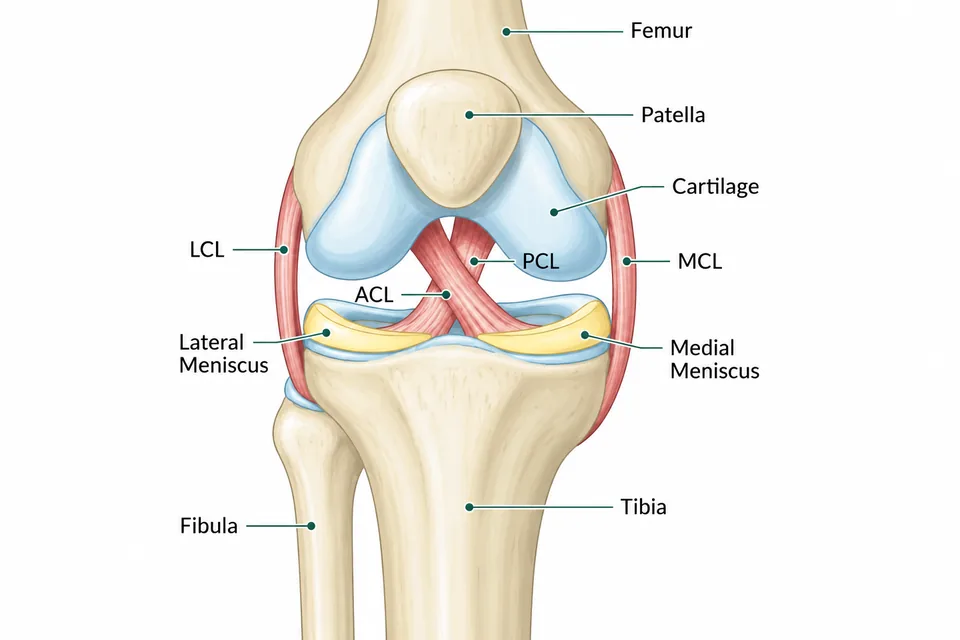
Knee pain may come from worn cartilage, an injured ligament, irritated tendons or inflammation inside the joint. Several problems can feel similar, so location alone does not establish a diagnosis. We ask about stiffness, swelling and instability before deciding which tissues need closer examination and what care might help.
Knee osteoarthritis
Cartilage becomes thinner and the joint may feel stiff after sitting. Knee osteoarthritis treatment focuses on movement, strength and reducing daily pain.
Ligament injuries (ACL and MCL)
Twisting injuries can damage the bands that steady your knee. ACL tear treatment depends on instability and activity goals; explore ACL and meniscus injury care.
Meniscus tears
The menisci are cartilage pads that spread weight across the knee. Meniscus tear treatment depends on locking, tear pattern and symptoms, not the scan alone.
Kneecap pain and instability
Pain around the kneecap often worsens with stairs or squatting. A kneecap that slips out needs assessment and a plan to restore control.
Bursitis, tendon pain and gout
Inflamed cushioning sacs or tendons can cause local tenderness. Gout causes sudden inflammation, but a hot swollen knee also needs checks for infection.
Knee pain symptoms and what they may mean
Symptoms offer clues, but they cannot confirm the cause without an examination. Note whether pain started suddenly, follows activity or wakes you at night. Swelling, locking and fever change how quickly you should seek help. Use this guide for urgency rather than diagnosing yourself from a single symptom.
Knee pain without injury may reflect arthritis, gout or a change in activity. Swollen knee causes include inflammation, bleeding and infection, so new swelling deserves attention.
| What you notice | Possible cause | How soon to be seen |
|---|---|---|
| Pain on stairs | Kneecap irritation or arthritis | Book if persistent or limiting activity |
| Stiffness after sitting | Osteoarthritis | Routine assessment if recurring |
| Twist followed by giving way | Ligament injury | Prompt assessment, sooner if unable to walk |
| Knee stuck and unable to straighten | Displaced meniscus tear or loose fragment | Urgent assessment today |
| Hot swollen knee with fever | Possible joint infection | Emergency assessment now |
| Sudden severe swelling without injury | Gout, infection or bleeding | Urgent assessment today |
| Deformity after a fall | Fracture or dislocation | Emergency assessment now |
When to see a knee specialist in HSR Layout
Arrange assessment when pain changes your walking, interrupts sleep or keeps returning despite simple activity changes. A knee specialist in HSR Layout can check persistent stiffness, giving way or unexplained swelling. Seek help sooner after injury if you cannot bear weight, rather than repeatedly testing the painful knee.
Signs that need urgent care
A hot swollen knee with fever needs emergency care, even without an injury. Deformity, a cold foot or new numbness also needs immediate assessment. Do not force a locked knee straight or push a displaced joint back.
How we diagnose knee problems
Diagnosis starts with your story and a careful examination, not an automatic scan request. We check how your knee moves and whether symptoms could come from elsewhere. Tests answer specific questions, such as whether there is a fracture, ligament damage or inflammation. Your doctor explains how results affect treatment.
Examination
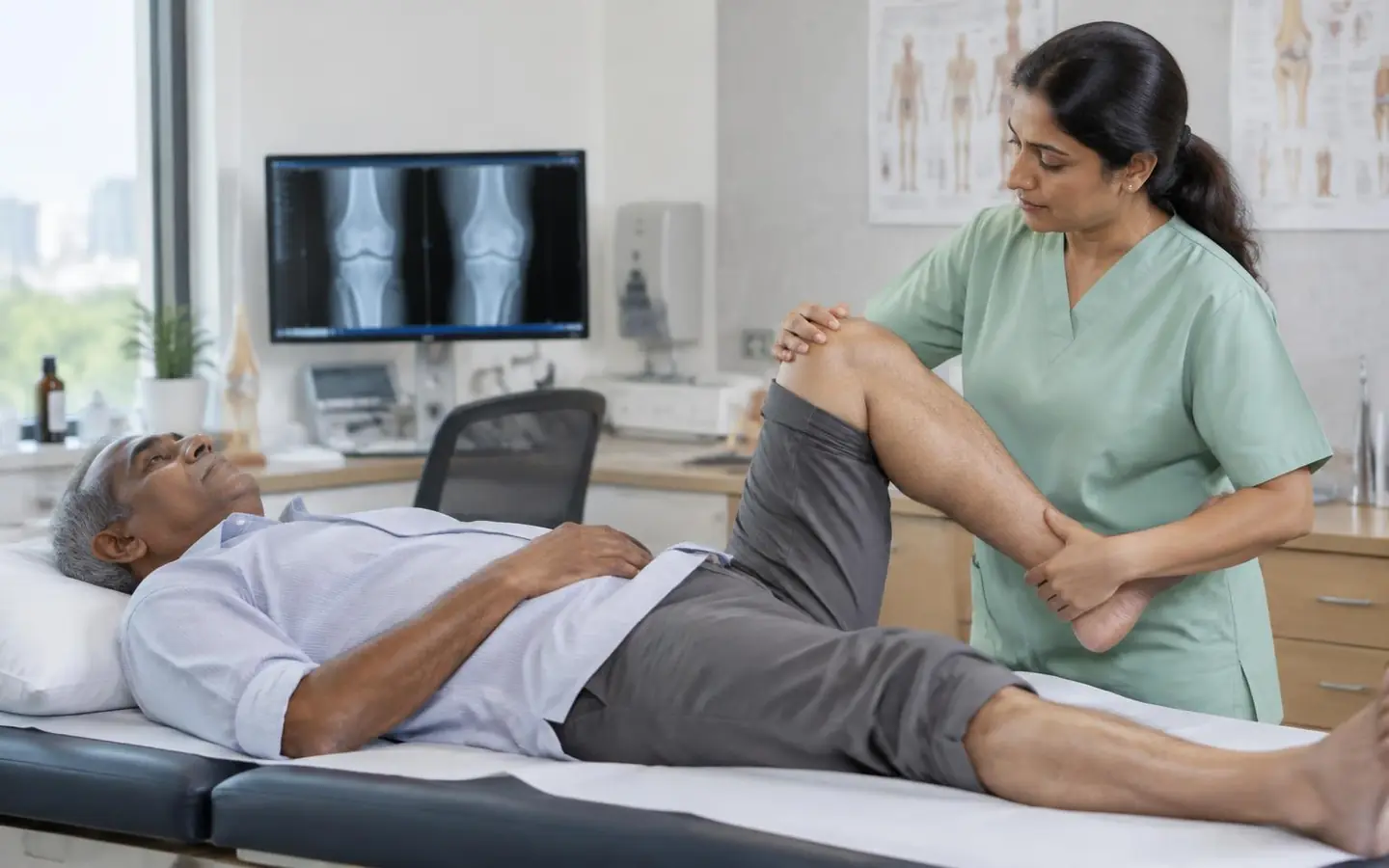
We watch you walk, check swelling and gently assess movement and stability. Hip problems sometimes cause knee pain; hip pain treatment may then be relevant.
X-ray
A digital X-ray can show bone injury, alignment and arthritis changes. Typical osteoarthritis does not always require imaging, especially with a clear clinical picture.
MRI scan
MRI shows soft tissues when the result could change care. It is arranged when needed; your doctor explains where it is done. Discuss imaging questions with radiology and diagnostics.
Blood tests and joint fluid tests
Blood tests may help assess inflammation or infection. A needle sample of joint fluid can check for crystals and infection when swelling is unexplained.
Knee pain treatment options in HSR Layout
Your knee pain treatment in HSR Layout should match the diagnosis and your daily goals. Many painful knees improve with guided exercise, activity changes and suitable medicines. Procedures are considered for specific problems, not simply because a scan looks abnormal. We discuss likely benefits, risks and alternatives before any decision.
Non surgical treatment
Guided care aims to improve movement and make daily tasks manageable.
Physiotherapy and strengthening
Our physiotherapy rooms are in-house, supporting supervised practice and home exercise planning. Physiotherapy builds thigh and hip strength while gradually improving knee movement. Exercises should be adjusted if pain remains clearly worse the following day.
Weight, activity and supports
If excess weight contributes to symptoms, gradual weight reduction can reduce joint load. Try shorter walks or cycling instead of repeated deep squats. A walking stick or selected brace may help when fitted and used correctly.
Medicines and injections
A topical anti-inflammatory may help arthritis pain; tablets need checks for stomach, kidney and heart risks. A knee injection for pain, usually corticosteroid, may offer short relief alongside exercise. Infection must be excluded, and diabetes can affect planning.
Knee arthroscopy
Considering knee arthroscopy in Bangalore? Ask about its purpose and limits. Keyhole surgery may address selected tears, but is not routine osteoarthritis treatment. Discuss anaesthesia, infection, clots and rehabilitation before choosing surgery.
Knee replacement surgery
Considering knee replacement surgery in Bangalore? Surgery replaces damaged surfaces with artificial parts. Our operation theatres support surgical care; discuss alternatives and home support before deciding.
Who needs a knee replacement
Replacement may be considered when arthritis substantially limits life despite suitable non surgical care. Pain, sleep, walking and your preferences matter more than an X-ray alone. Infection, blood clots and ongoing pain are important risks to discuss.
Total or partial knee replacement
Before a total knee replacement in HSR Layout, the surgeon assesses the whole joint and your overall health. Partial replacement may suit damage confined to one area. Your surgeon will explain whether it suits you and where it is done.
Recovery timeline
Knee replacement recovery time varies with health, strength and home support. Walking with aids often starts within a day or so, when safe. Many stop aids around six weeks; fuller recovery can take months to a year or longer.
Recovery and rehabilitation
Recovery means regaining useful movement and confidence, not just waiting for pain to settle. Your programme depends on whether you have arthritis, an injury or recent surgery. Follow the agreed loading limits and attend reviews. Tell your team if exercises cause lasting swelling or your walking becomes less steady.
After surgery, report wound discharge, fever or increasing redness promptly. New calf swelling needs urgent assessment; chest pain or breathlessness requires emergency help.
Protecting your knees
You can protect your knees by building strength, increasing activity gradually and choosing movements you can control. Regular movement usually helps more than prolonged complete rest. Break up long sitting periods and allow recovery between demanding sessions. Pain that keeps worsening needs assessment rather than a harder exercise routine.
For knee pain while climbing stairs, use the handrail and reduce repeated trips. Use padding rather than kneeling on hard floors.
Your knee specialist at Greenview
Your assessment can be with Dr. Sharath Kumar Shetty or Dr. Vidyasagar, both registered orthopaedic surgeons. Their interests include knee replacement, arthroscopy, sports injuries and arthritis. Consultation hours differ from the hospital’s round the clock OPD. Call before travelling so your visit matches the doctor’s available appointment slot.
Dr. Sharath Kumar Shetty, MBBS, MS (Orthopaedics), holds Karnataka Medical Council registration 45143. His consultation time is 4:00 PM to 5:00 PM.
Dr. Vidyasagar, MBBS, MS (Orthopaedics), holds Karnataka Medical Council registration 77851. His consultation time is 10:00 AM to 12:00 PM.
Ask an orthopedic doctor in HSR Layout about symptoms involving several joints.

Dr. Sharath Kumar Shetty
MBBS, MS (Orthopaedics) · KMC 45143
Consultation: 4:00 PM to 5:00 PM
View Dr. Sharath Kumar Shetty's profile
Dr. Vidyasagar
MBBS, MS (Orthopaedics) · KMC 77851
Consultation: 10:00 AM to 12:00 PM
View Dr. Vidyasagar's profileCost and cashless insurance for knee treatment
The cost depends on your diagnosis, tests, procedure and rehabilitation needs. Ask for an estimate that separates hospital care from medicines and follow-up expenses. Greenview works with 43 insurers and TPAs for cashless treatment. Approval remains the insurer’s decision, with waiting periods, room limits and policy exclusions still applying.
Our insurance support can help you understand documents needed for preauthorisation. Bring your policy details, identity documents and any referral letters.
Frequently asked questions
These answers explain common concerns about painful knees and the choices you may face. They cannot replace examination, especially after injury or with a hot swollen joint. Use them to prepare questions for your appointment. Your own diagnosis, medicines and activity goals will shape advice that is safe for you.
Why does my knee hurt when I climb stairs?
Stairs place extra load through the kneecap and thigh muscles. Pain may reflect kneecap irritation, reduced strength or arthritis, but examination helps distinguish them. Try using a handrail and pacing repeated trips. Seek assessment if pain persists, swelling develops or the knee begins to give way.
Can knee arthritis be treated without surgery?
Yes, many people manage knee arthritis with strengthening, regular movement and weight management when appropriate. Medicines or selected injections may support activity rather than replace exercise. Your doctor reviews progress and checks side effects. Surgery becomes a discussion when symptoms remain substantially limiting despite a suitable treatment plan.
When do I need a knee replacement?
A replacement may be appropriate when arthritis causes substantial pain and limits everyday life despite suitable non surgical treatment. Your surgeon considers walking, sleep, health and personal goals together. There is no single scan finding that decides timing. Ask what improvement is realistic and which risks apply to you.
How long is recovery after knee replacement?
Most people begin supported walking early, once the surgical team says it is safe. Many reduce walking aids around six weeks, but progress differs. Strength and comfort can improve for months, sometimes beyond a year. Discuss work, stairs and driving separately, because each needs different levels of control.
Are knee injections helpful?
A corticosteroid injection may reduce arthritis pain briefly and help you take part in exercise. It does not rebuild worn cartilage or suit every swollen knee. Infection needs consideration before injection, and blood sugar may rise temporarily. Ask about likely duration, risks and what to do if pain worsens.
Is knee arthroscopy a major surgery?
Arthroscopy uses small cuts and a camera, but remains an operation with anaesthesia and recovery needs. It can help selected mechanical problems, rather than ordinary arthritis pain alone. Risks include infection, clots and persistent symptoms. Your surgeon should explain the specific target and what non surgical options remain available.
Should I rest or exercise with knee pain?
Reduce activities that sharply worsen pain, but avoid prolonged complete rest unless specifically advised. Gentle movement and gradual strengthening often support recovery. A recent injury may need temporary protection before loading increases. Seek advice if exercise causes lasting swelling, locking or instability rather than pushing through these warning signs.
Is knee replacement covered by insurance?
Some policies cover medically necessary knee replacement, subject to their terms and approval process. Waiting periods, exclusions and room limits can affect the amount approved. Greenview’s insurance team can help with paperwork but cannot promise authorisation. Request written clarification about implants, rehabilitation and expenses that you must pay yourself.
Book a knee consultation
For knee pain treatment in HSR Layout, call 080 6792 7777 to confirm a suitable doctor slot. You can also request an appointment and bring earlier reports for review. Tell us about locking, swelling or recent injury when booking. A hot swollen knee with fever needs immediate care instead.
Sources
These sources explain knee pain, osteoarthritis care and joint replacement in patient-friendly terms. They support the general information here, but do not determine your individual treatment. Recommendations must be matched to your examination and health history. Ask your doctor to explain anything that seems different from your personal care plan.