

Ureteric Stones: Ureteric Stone Treatment in HSR Layout
Medically reviewed by Dr. V H Ashwath Venkataramana, MBBS, MS (General Surgery), MRCS (Edinburgh), MCh (Urology) | Published and last reviewed:
Severe stone pain, fever or no urine? Call 080 6792 7777. Emergency open 24x7.
Fast relief for stone pain, day or night, and clear advice on when to wait and when to act.
Emergency: 24 × 7
A stone stuck in the ureter can cause some of the worst pain people ever feel. Greenview Medical Center provides ureteric stone treatment in HSR Layout around the clock, with fast pain relief, a CT scan to find the stone, medicines to help it pass, and ureteroscopy or stenting when it will not. Most small ureteric stones pass on their own within a few weeks. Our urologists help you know when to wait and when to act. Call 080 6792 7777.
What is a ureteric stone?
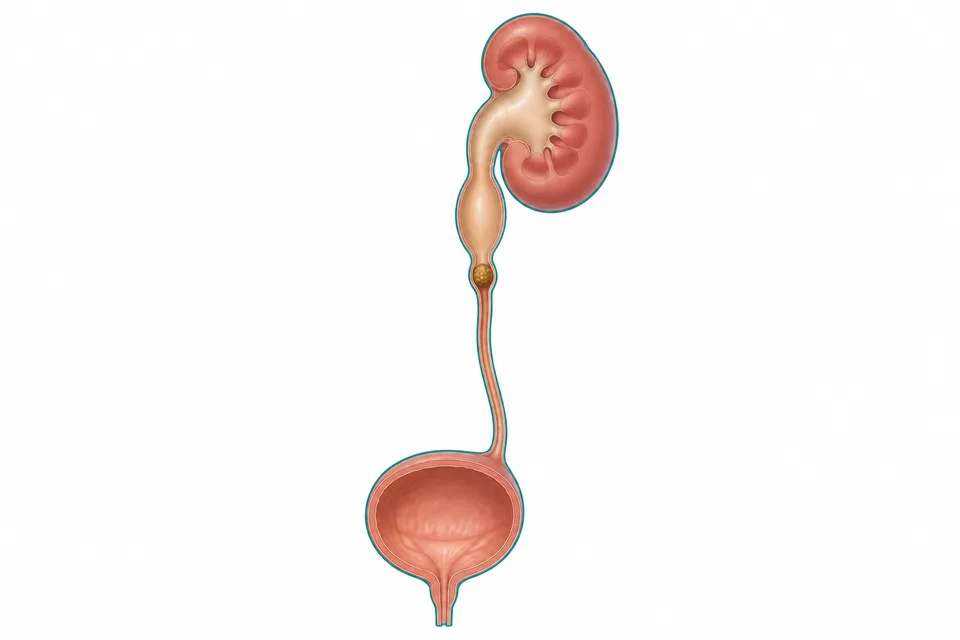
A ureteric stone is a kidney stone that has left the kidney and moved into the ureter, the narrow tube that carries urine to the bladder. The ureter is only a few millimetres wide, so a stone can get stuck, block urine and stretch the kidney. This causes intense pain and, if infection develops, can become serious.
Upper, middle and lower ureteric stones
Stones are described by where they sit. Upper stones are near the kidney, middle stones cross the pelvic bone, and lower stones are close to the bladder. Lower stones are the most likely to pass on their own, while upper stones more often need treatment.
Symptoms of a stone in the ureter
The pattern of renal colic pain
Pain from a ureteric stone, called renal colic, usually starts suddenly in the side or back below the ribs. It comes in waves, may move towards the lower abdomen and groin as the stone travels, and often makes people restless and unable to find a comfortable position. Nausea and vomiting are common.
Urinary symptoms
As the stone nears the bladder, you may need to pass urine often and urgently, feel burning, or see pink, red or brown urine. Men may feel pain in the testicle and women in the labia on the same side.
When a ureteric stone is an emergency
Come to our 24x7 emergency immediately or call 080 6792 7777 if you have:
- Fever, chills or shivering with stone pain, which may mean an infected, blocked kidney
- Pain that strong painkillers do not control
- Repeated vomiting and unable to keep fluids down
- Little or no urine
- A stone and only one working kidney
- Stone pain during pregnancy
An infected, blocked kidney needs urgent drainage and antibiotics. This is one of the few true urology emergencies.
What happens when you arrive with stone pain
Our emergency team aims to ease your pain quickly and confirm the cause.
Fast pain relief
Anti inflammatory pain relief by injection or suppository works well for most stone pain. Stronger medicines and anti sickness medicines are added if needed.
CT KUB scan
A low dose CT scan of the kidneys, ureters and bladder shows the exact size and position of the stone and whether the kidney is swollen. In pregnancy and for some young patients, ultrasound is used instead.
Checking kidney function and infection
Blood and urine tests check kidney function and look for infection. These results, with the scan, decide whether you can go home to let the stone pass or need a procedure.
Will my ureteric stone pass on its own?
The chance of passing depends mainly on size and position. If your pain is controlled, there is no infection and your kidney is working well, it is usually safe to wait up to about four weeks with regular review.
| Stone size | Chance of passing on its own | Usual approach |
|---|---|---|
| Under 5 mm | Most pass | Fluids, pain relief, medicines, review |
| 5 to 10 mm | Some pass, especially lower stones | Trial of medicines, or ureteroscopy if pain persists |
| Over 10 mm | Unlikely | Ureteroscopy or other procedure |
| Any size with fever or blockage | Do not wait | Urgent drainage, then stone treatment |
Medicines that help stones pass
For lower ureteric stones under 10 mm, a medicine that relaxes the muscle of the ureter may be prescribed to help the stone pass faster and with less pain. This is called medical expulsive therapy.
Helping the stone pass at home
- Take pain relief regularly as prescribed
- Drink water steadily through the day, without forcing very large amounts
- Keep moving and walking if you can
- Use a hot water bag on the back or side for comfort
- Return immediately if fever, uncontrolled pain or vomiting develop
Catching the stone for testing
Pass urine through a strainer or tea filter. If you catch the stone, bring it to us for analysis, which helps prevent future stones.
Ureteric stone treatment options in HSR Layout
Treatment is advised if the stone is unlikely to pass, pain continues, the kidney is blocked or infected, or the stone has not moved after a few weeks.
Ureteroscopy with laser (URS)
Ureteroscopy is the most common procedure for ureteric stones. A thin scope is passed through the urethra and bladder into the ureter, with no cuts on the body.
How ureteroscopy is done
Under spinal or general anaesthesia, the urologist reaches the stone, breaks it with a laser and removes the pieces with a tiny basket. The procedure usually takes 30 to 60 minutes in our operation theatres.
Recovery after ureteroscopy
Most people go home the same day or next morning and return to desk work in two to three days. Mild burning and pink urine are common for a few days.
DJ stent
A DJ stent is a soft, thin tube with a curl at each end, placed inside the ureter from kidney to bladder. It keeps urine flowing past swelling or a stone.
Why a stent is placed
A stent may be placed after ureteroscopy to let the ureter heal, or as an emergency step to drain an infected, blocked kidney before the stone is treated.
Living with a stent
You may notice frequent urination, urgency, some blood in urine and a pulling feeling in the side when passing urine. These are normal and settle once the stent is removed. Most people can work and carry on daily life with a stent.
Stent removal
Stents are temporary and usually removed after one to four weeks, sometimes longer, in a short procedure. It is important never to miss your removal date, as a stent left too long can become blocked or encrusted. We give you a written removal date.
Shock wave lithotripsy for ureteric stones
Some upper ureteric stones can be treated with shock waves from outside the body. It is less effective for stones low in the ureter, where ureteroscopy is usually preferred.
Draining an infected, blocked kidney
If a stone causes fever and blockage, the kidney is drained first with a stent or a thin tube through the back called a nephrostomy, along with antibiotics. The stone is removed once the infection has cleared.
After treatment: follow up and preventing the next stone
After your stone passes or is removed, a follow up scan confirms you are stone free and your kidney has recovered. Ureteric stones start in the kidney, so the same prevention steps apply: drink enough to keep urine pale, reduce salt and avoid sugary drinks. Our guide to kidney stone treatment in HSR Layout explains how to prevent kidney stones in detail.
Ureteric stones in pregnancy
Stone pain in pregnancy needs prompt assessment. Ultrasound is used instead of CT. Many stones pass with pain relief and fluids; if needed, a temporary stent or drainage tube protects the kidney until after delivery. We work with our obstetrics and gynaecology team.
Your stone specialist at Greenview
Our urologists, Dr. V H Ashwath Venkataramana and Dr. Narasimhaiah, manage ureteric stones from emergency care to ureteroscopy and follow up. Meet our urologist in HSR Layout team.

Dr. V H Ashwath Venkataramana
Urologist · KMC 119804
MBBS, MS (General Surgery), MRCS (Edinburgh), MCh (Urology)
Consultation: 4:30 PM. Please call to confirm a time.
View Dr. V H Ashwath Venkataramana's profile
Dr. Narasimhaiah
Urologist · KMC 39419
MBBS, MS, MCh
Consultation: 10:30 AM. Please call to confirm a time.
View Dr. Narasimhaiah's profileCost and cashless insurance
The cost depends on emergency care, scans, the procedure and whether a stent is needed. We share an estimate as early as possible, and in emergencies treatment starts first while our insurance desk handles approval. Greenview offers cashless treatment with 43 insurers and TPAs. See cashless insurance.
Frequently Asked Questions
Will a 5 mm stone pass on its own?
Many stones around 5 mm pass on their own, especially if they are in the lower ureter. It can take a few days to a few weeks.
How long does a ureteric stone take to pass?
Most stones that will pass do so within four weeks. If a stone has not moved by then, or pain continues, treatment is usually advised.
When is a ureteric stone an emergency?
Fever or chills, uncontrolled pain, repeated vomiting, very little urine, a single kidney, or pregnancy all need emergency care.
What is the best position for kidney stone pain?
There is no single position that stops the pain. Walking, gentle movement and a hot water bag help some people. Proper pain relief is the most effective step.
Is ureteroscopy painful?
It is done under anaesthesia, so you feel nothing during it. Afterwards, mild burning and discomfort are common for a few days.
Why do I need a DJ stent?
A stent keeps urine draining from the kidney while the ureter heals after surgery or while an infected, blocked kidney recovers.
How long can a DJ stent stay in?
Most stents are removed after one to four weeks. Some types can stay longer, but every stent must be removed or changed on time.
Is blood in urine normal with a stent?
Light pink urine is common with a stent. Heavy bleeding, clots, fever or inability to pass urine need prompt review.
Can I work with a stent?
Yes. Most people do desk work and normal activities with a stent, though some feel more comfortable limiting heavy exercise.
Is ureteroscopy covered by insurance?
Most health insurance policies cover ureteroscopy and stenting. Our insurance desk arranges cashless approval.
Get help for stone pain now
Greenview Medical Center, Opposite Agara Lake, Sector 5, HSR Layout, Bengaluru 560102. Emergency open 24x7. Call 080 6792 7777 or WhatsApp +91 96861 15772 for ureteric stone treatment in HSR Layout.
Email: appt@gvhcol.com
Sources
- NICE guideline NG118: Renal and ureteric stones: assessment and management
- NHS: Kidney stones
- European Association of Urology: Patient information
This page is for general information and does not replace a consultation with a doctor.